




Wire Rope Ball End & Shank
Ball Fittings
Wire rope ball end fittings, also known as shank balls, anchor cable assemblies at fixed or intermediate points and must be rotary swaged for a permanent, high-integrity connection.
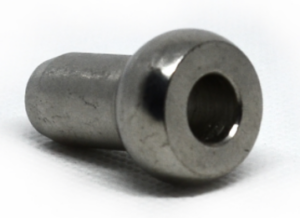
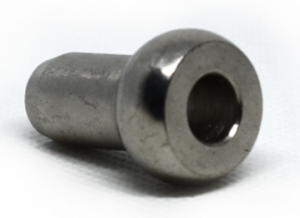
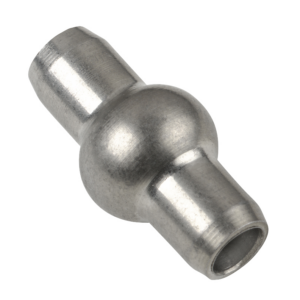
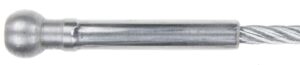
Wire rope ball end fittings, also known as shank balls, create secure anchoring and positioning points on wire rope and aircraft cable assemblies. They can be installed at the cable end or at an intermediate position where a fixed stop or engagement point is required.
Lexco Cable supplies single shank balls, double shank balls, stainless steel shank balls, zinc-plated steel shank balls, and ball shanks for aircraft cable, OEM equipment, control cables, and industrial wire rope assemblies. These fittings must be rotary swaged onto the cable for a permanent connection.
Wire Rope Ball End Fittings for OEM & Industrial Applications
Lexco supplies wire rope ball end fittings for OEM manufacturers, structural systems, and industrial applications requiring secure anchoring and consistent load transfer. Each shank ball is selected or manufactured based on cable diameter, load requirements, and environmental conditions.
Available in stainless steel and zinc-plated steel, these fittings are suitable for both corrosion-resistant and general-purpose applications. Lexco also provides fully assembled cable systems with ball ends installed for improved consistency and reduced installation time.
Applications for Wire Rope Ball End Fittings
Wire rope ball ends are used where a cable assembly needs a precise fixed or intermediate anchor point. Common applications include aircraft cable assemblies, control cables, OEM equipment, safety cable systems, and industrial machinery.
Lexco can also supply complete cable assemblies with ball ends installed to help maintain consistent fitting placement and finished dimensions.
Why Use Wire Rope Ball Ends Instead of Stops or Sleeves
While stops and sleeves can provide basic positioning along a cable, wire rope ball end fittings offer a more robust and precise solution.
- Higher strength and load-bearing capability
- More precise positioning and consistent geometry
- Improved durability under repeated load conditions
- Cleaner integration into engineered systems
For applications requiring reliability and structural performance, ball end fittings are often preferred over basic cable stops.