


Push-Pull Controls

Lexco Cable manufactures mechanical control cables and push pull control cable assemblies designed for precise motion transfer, remote actuation, and reliable mechanical performance.

Our cable systems are engineered for OEM, automotive, industrial, and specialty applications where smooth operation, durability, and consistent force transmission are critical. Each mechanical control cable is built to perform in demanding environments while maintaining long-term reliability and responsiveness.

From prototype development to production-scale manufacturing, Lexco delivers custom-engineered cable solutions that integrate seamlessly into complex mechanical systems.

https://www.lexcocable.com/media/susae1hk/1x19_uncoated.png

View Catalog

Push-Pull Control Cable Manufacturer & Supplier

Lexco Cable manufactures and assembles push-pull control cables for OEMs, automotive systems, industrial equipment, and specialty mechanical applications. Our control cables are engineered for smooth operation, durability, and precise motion transfer in demanding environments.

We offer:

  • Custom push-pull control cable assemblies
  • Pull-only and push-pull configurations
  • Cablecraft brand push-pull control assemblies
  • Multiple conduit types and liner options
  • Custom stroke lengths and travel ranges
  • End fittings and hardware for specific applications
  • Prototyping and production-volume manufacturing

From throttle and brake controls to latch releases and remote actuation systems, Lexco delivers cable solutions designed to integrate seamlessly into your equipment.

Need help selecting the right control cable? Request a quote or contact our team for specification guidance.

Push-Pull Control Cable Specifications, Configurations & Options

Push-Pull Control Design & Configuration Considerations

Choosing the right push-pull control cable depends on the application, required motion, and environmental conditions.

Push-pull cables are designed to transmit force in both directions, making them ideal for systems requiring controlled movement such as throttle controls, gear shifting, and remote actuation. Pull-only cables are used when force is only required in one direction, such as latch releases or safety mechanisms.

When specifying a push-pull control cable, engineers typically evaluate:

  • Required stroke or travel length
  • Load and actuation force requirements
  • Cable routing and bend radius constraints
  • Flexibility versus rigidity of the conduit
  • Mounting configurations and available space
  • Type of motion control needed (linear vs precise positioning)

For applications requiring smooth, repeatable motion, such as automotive or industrial controls, cable construction and internal components play a critical role in performance. For heavier-duty applications, stronger materials and reinforced conduit systems may be required to handle higher loads and extended use.

OEM and industrial customers often select configurations based on how the cable will perform over time, especially in high-cycle or mission-critical systems.

Materials, Conduits & Performance Factors

Material and component selection directly impact the durability, responsiveness, and lifespan of push-pull control cables.

Cable assemblies can be manufactured using carbon steel or stainless steel, depending on strength requirements and environmental exposure. Stainless steel is typically selected for corrosive or outdoor environments, while carbon steel is often used in controlled environments where cost efficiency is a priority.

Conduit design and internal liners also influence performance:

  • Low-friction liners improve smooth operation and reduce wear
  • Lubricated inner members enhance cable life and responsiveness
  • Reinforced conduits provide additional strength for demanding applications
  • Protective coatings can improve resistance to moisture, chemicals, and abrasion

For applications exposed to harsh environments such as outdoor equipment, marine settings, or high-moisture conditions, corrosion resistance and sealing become critical factors. In high-cycle applications, minimizing friction and wear is essential to maintaining consistent performance over time.

Selecting the appropriate materials and internal components ensures that the control cable performs reliably under real-world operating conditions.

Need Help Selecting Push-Pull Controls?

Not sure which configuration, material, or travel range is right for your application? Our team can assist with specification guidance, custom design, and production-ready solutions.

How to Specify a Mechanical Control Cable

Selecting the right mechanical control cable requires careful evaluation of system requirements and operating conditions. Lexco supports engineers and OEM teams in defining optimal cable specifications for performance and longevity.

  • Required stroke length and travel distance
  • Actuation force and load requirements
  • Routing constraints and bend radius limitations
  • Mounting configuration and installation space
  • Type of motion control required, including linear or responsive actuation

For high-performance systems, proper specification ensures smoother operation, reduced wear, and improved system reliability over time.

Mechanical Control Cable Materials & Construction

The performance of a mechanical control cable depends heavily on material selection and internal construction. Lexco engineers each push pull control cable to match environmental and operational demands.

Material options include:
  • Carbon steel for cost-effective, controlled environments
  • Stainless steel for corrosion resistance and outdoor use
Performance-enhancing features include:
  • Low-friction internal liners for smooth actuation
  • Lubricated cable elements for reduced wear
  • Reinforced conduit designs for heavy-duty applications
  • Protective coatings for moisture and chemical resistance

These design choices ensure consistent performance across high-cycle, industrial, and mission-critical applications.

Custom Mechanical Control Cables for OEM & Industrial Applications

Lexco specializes in manufacturing mechanical control cables for OEMs and industrial manufacturers that require precise, reliable motion control systems.

Each push pull control cable is engineered to meet exact specifications for performance, durability, and integration into existing equipment. Whether you need a single prototype or large-scale production, Lexco provides scalable manufacturing support and technical expertise.

Our cables are used across industries including automotive, industrial machinery, marine systems, and specialty equipment applications.

Frequently Asked Questions About Mechanical Control Cables

What is a mechanical control cable?2026-07-09T20:28:55+00:00

A mechanical control cable is a flexible system used to transmit motion or force between components in a machine or system.

What is a push pull control cable?2026-07-09T20:31:28+00:00

A push pull control cable transmits force in both directions, enabling controlled mechanical movement in systems such as throttle or gear controls.

Where are mechanical control cables used?2026-07-09T20:32:08+00:00

They are used in automotive, industrial, marine, agricultural, and specialty mechanical systems requiring remote actuation or motion control.

Can control cables be customized?2026-07-09T20:32:50+00:00

Yes. Lexco manufactures fully custom mechanical control cables tailored to specific performance, length, and environmental requirements.

What materials are used in control cables?2026-07-09T20:33:56+00:00

Common materials include carbon steel and stainless steel, along with specialized liners and coatings depending on application needs.

How are push-pull controls used in the automotive industry?2026-02-12T18:41:38+00:00

They are used in automatic systems like brakes, transmission controls, and air intake mechanisms.

Ready to get started? Request a quote.

What are common aerospace applications for push-pull cables?2026-02-12T18:41:45+00:00

Applications include throttle controls, landing gear mechanisms, rudder controls, and other precision control systems.

Ready to get started? Request a quote.

What are the key components of a push-pull cable system?2026-02-12T18:41:51+00:00

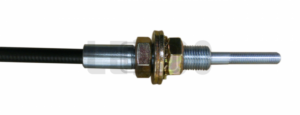
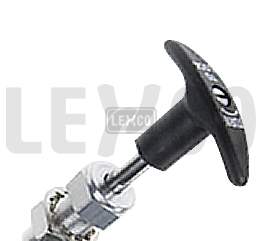
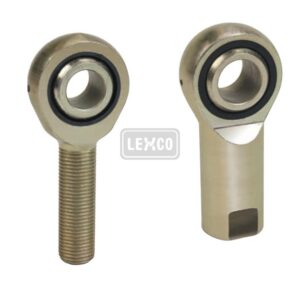
Key components include the inner member (core cable), conduit (protective casing), conduit cap (ends of the conduit), seals (to prevent dust and moisture ingress), and end rods (for connecting the cable to control points).

Ready to get started? Request a quote.

How do push-pull controls work?2026-02-12T18:41:55+00:00

Push-pull controls work by transferring force through a cable assembly comprising an inner member (core cable) that slides within a protective conduit. The conduit guides and protects the cable, while the end rods and fittings ensure the assembly is connected to control points.

Ready to get started? Request a quote.

What are push-pull controls?2026-02-12T18:42:00+00:00

Push-pull controls are mechanical systems that use cables to transmit precise control forces in both pulling and pushing directions. These systems are widely used in various industries such as aerospace, automotive, heavy machinery, marine, and OEM applications.

Ready to get started? Request a quote.

Which Conduit Type is Used in Frequent or Continually Cycling Push-pull Applications?2026-02-12T19:01:16+00:00

For frequent or continually cycling push-pull applications, a lined conduit, such as Polyethylene lined, is used to reduce friction.

Ready to get started? Request a quote.

What Are the Most Common Cable Constructions Used in Push-pull Controls, and What Are Their Application Differences?2026-02-12T19:01:22+00:00

7×19 cables are extremely flexible, making them ideal for pull assemblies. They are capable of going over tight 90º bends or over small pulleys that are less than 3” diameter.

7×7 cables are moderately flexible and suitable for pull applications with medium-sized pulleys at approximately 45º bends.

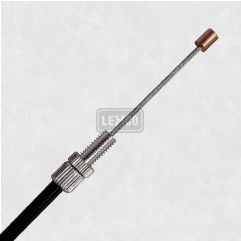
1×19 is a coarse strand cable with little flexibility that is most useful for push-type applications.

Solid wire has minimal flexibility and is suitable for straight-run applications.

Ready to get started? Request a quote.

Go to Top