




THE ROLE OF WIRE ROPE IN AEROSPACE & DEFENSE ASSEMBLIES
THE ROLE OF WIRE ROPE IN AEROSPACE & DEFENSE ASSEMBLIES
Wire rope plays a vital role in non-flight-critical aerospace and military applications, providing reliable support for maintenance equipment, lifting systems, manufacturing fixtures, lanyards, and tethers. This comprehensive overview details key specifications—including MIL-DTL-83420, MIL-DTL-87161, MIL-DTL-83140, and MIL-DTL-18375 aircraft cables—alongside critical factors like cable constructions, materials, protective coatings, fatigue resistance, and mil-spec fittings. It also outlines the essential technical drawings, dimensions, and testing requirements necessary to order a tailored custom assembly. To explore options or get started on your design, visit the Lexco Wire Rope product page.
This blog will explore:
- What is MIL-DTL-83420 aircraft cable?
- How do cable construction, materials, and coatings affect performance?
- Where are non-flight-critical aerospace assemblies used?
- How does Lexco fabricate custom aerospace cable assemblies?
Key Takeaways:
- MIL-DTL-83420 aircraft cable is available in multiple constructions, materials, and jacket configurations.
- Cable selection should account for flexibility, fatigue, corrosion, abrasion, routing, and environmental exposure.
- A finished assembly may require compatible mil-spec fittings, testing, inspection, and traceability.
- Lexco fabricates custom, non-flight-critical aerospace assemblies using customer-specified cable and hardware.
- Drawings, dimensions, testing standards, and documentation requirements should be established early in the quoting process.
How Is Wire Rope Used in Aerospace Assemblies?
Aircraft cable is commonly called wire rope because of its widespread use throughout the aerospace and defense industries. Its combination of flexibility, tensile strength, corrosion resistance, and durability makes it suitable for mechanical assemblies that must remain dependable under repeated use and demanding operating conditions.
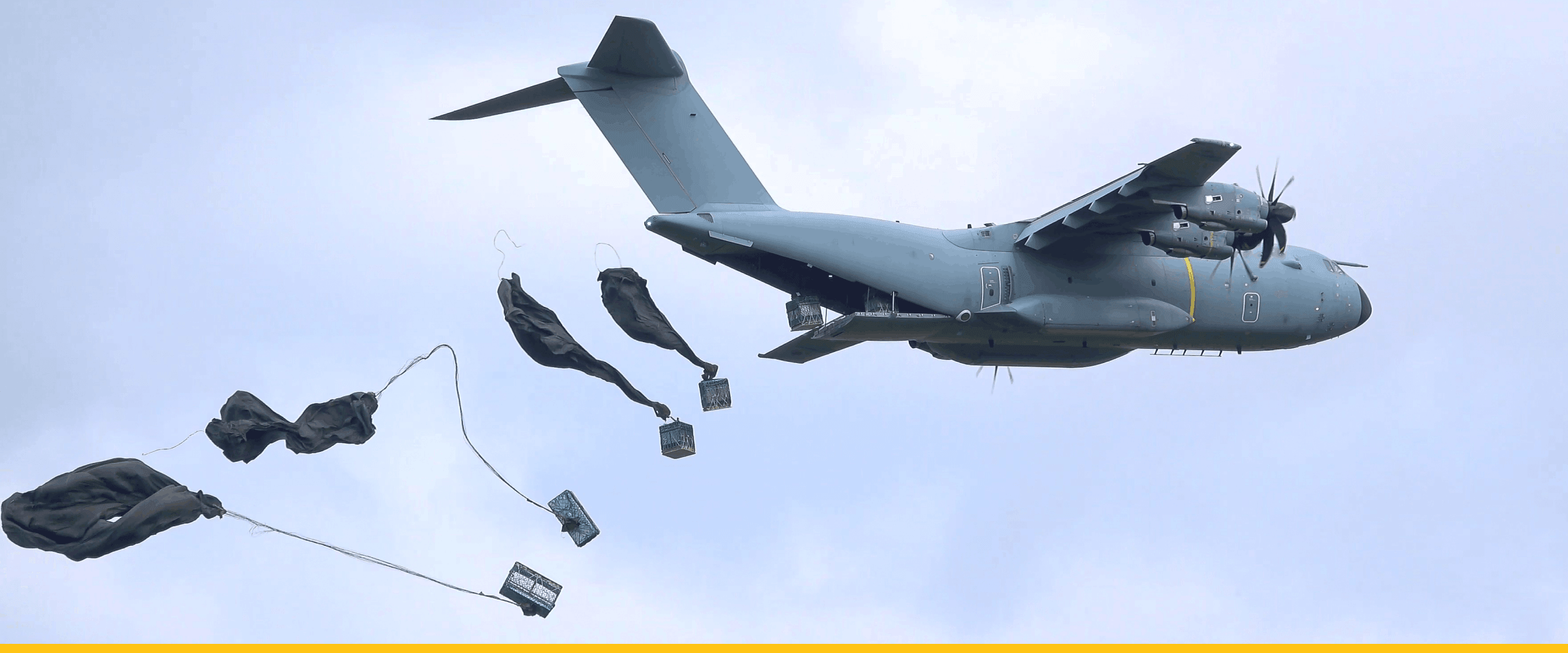
In non-flight-critical applications, aircraft cable may be used to position, lift, rig, retain, support, winch, hoist, brace, or secure components. These applications can be found throughout aircraft manufacturing, maintenance operations, cargo-handling systems, ground-support equipment, military equipment, and specialized aerospace machinery.
MIL-DTL-83420 is one of the most commonly referenced specifications for flexible aircraft cable. Other relevant specifications may include MIL-DTL-87161 for rigid strand constructions such as 1×7 and 1×19, MIL-DTL-83140 for a rotation-resistant 19×7 cable, and MIL-DTL-18375 for SS305 non-magnetic aircraft cable applications.
The correct cable specification depends on the assembly’s intended function, loading, movement, routing, environmental exposure, and required documentation. The cable must then be combined with the appropriate fittings and fabrication processes to create the finished assembly.
Learn more about Lexco’s available wire rope products.

TYPE 1
TYPE 2

What Is MIL-DTL-83420 Aircraft Cable?
The MIL-DTL-83420 lubrication improves endurance and performance relative to commercial grade dry cable.
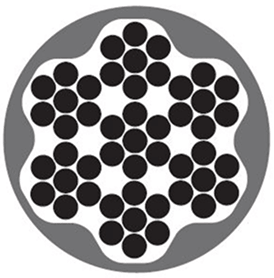
MIL-DTL-83420 cable is available in diameters 1/32” through 3/8″ and it’s classified by type and composition.
Type I is non-jacketed aircraft cable. The exterior cable surface remains exposed and lubricated.
Type II aircraft cable includes a clear nylon protective jacket. The jacket provides a barrier between the wire rope and surrounding surfaces and may help protect the underlying wires from abrasion or environmental exposure.
Composition A is galvanized carbon steel aircraft cable.
Composition B is corrosion-resistant stainless steel aircraft cable manufactured from Type 302 or Type 304 stainless steel.
The corresponding specification designations are:
MIL-DTL-83420 Type I, Composition A – M83420/1-XXX
MIL-DTL-83420 Type I, Composition B – M83420/2-XXX
MIL-DTL-83420 Type II, Composition A – M83420/3-XXX
MIL-DTL-83420 Type II, Composition B – M83420/4-XXX
MIL-DTL-83420 aircraft cable is also available in several constructions.
A 3×7 construction contains three strands made from seven wires each. For MIL-DTL-83420 cable, 3×7 construction is available only in a 1/32-inch diameter.
A 7×7 construction contains seven strands with seven wires per strand. This construction provides moderate flexibility and is available in 3/64-inch, 1/16-inch, and 3/32-inch MIL-DTL-83420 diameters.
A 7×19 construction contains seven strands with 19 wires in each strand. The larger number of smaller wires gives the cable greater flexibility and a smaller minimum bend radius than 7×7 cable. MIL-DTL-83420 7×19 cable is available in diameters ranging from 1/16 inch through 3/8 inch.
These construction, material, and jacket differences affect flexibility, corrosion resistance, finished diameter, and suitability for different operating environments.
MIL-DTL-83420 cable is only one component of the finished assembly. Lexco takes the specified cable and fabricates it into a complete assembly with the required fittings, dimensions, coatings, testing, identification, and documentation.
| CABLE OPTION | GENERAL CONSIDERATION |
|---|---|
| Galvanized cable | General corrosion protection and cost considerations (MIL-DTL-83420 Composition A) |
| Stainless steel cable | Greater corrosion resistance (MIL-DTL-83420 Composition B) |
| Non-jacketed cable | Bare cable is capable of operation within a -65 °F to +250 °F |
| Jacketed cable | Nylon is capable of operation within a -65 °F to +200 °F |
| 7×7 construction | Moderate flexibility (for diameters 3/64”, 1/16” 3/32”) |
| 7×19 construction | MIL-DTL-83420 7×19 is for diameters 3/32″ through 3/8″ |
Final cable selection should always be based on the customer drawing, intended application, operating environment, and governing specification.
How Do Cable Construction, Materials and Coatings Affect Performance?
Cable construction influences how easily an assembly bends, how tightly it can be routed, and how it responds to repeated movement.
A 7×7 cable provides moderate flexibility and may be appropriate for assemblies with relatively simple routing or limited bending. A 7×19 cable is more flexible and may be better suited to applications involving tighter turns, smaller bend radii, or repeated movement.
Greater flexibility does not automatically make 7×19 cable the correct choice for every application. Diameter, loading, fitting compatibility, required stiffness, routing, and environmental conditions must all be evaluated.
Material selection also affects assembly performance.
Galvanized aircraft cable uses a zinc coating to protect the underlying carbon steel. It may be appropriate where the application allows galvanized material and the operating environment does not require the greater corrosion resistance of stainless steel.
Stainless steel aircraft cable offers greater resistance to corrosion and may be specified for assemblies exposed to moisture, weather, chemicals, or other demanding environmental conditions. Stainless steel may also be selected when material compatibility with surrounding equipment or fittings is required.
Coated aircraft cable adds another layer of protection. MIL-DTL-83420 Type II cable uses a clear nylon jacket that can help protect the individual wires from abrasion, contact, and fraying. A jacket can also separate the cable from nearby surfaces or components.
The jacket increases the finished cable diameter, which must be considered when selecting fittings or routing the cable through guides, openings, and equipment. The coating material, thickness, temperature exposure, chemical exposure, and expected movement should all be defined before fabrication.
Why Does Wire Rope Fatigue Resistance Matter?
Wire rope fatigue resistance is especially important in aircraft cable assemblies exposed to repeated movement, bending, vibration, or changing loads.
Each time wire rope bends, the individual wires and strands move slightly in relation to one another. Over time, repeated movement can contribute to wear, wire damage, and fatigue.
Fatigue performance may be influenced by:
- Cable construction
- Bend radius
- Pulley or sheave diameter
- Routing
- Tension
- Abrasion
- Corrosion
- Fitting design
A cable that repeatedly bends around a small pulley experiences different stresses than a stationary retaining cable or tether. A cable exposed to moisture, abrasive contact, or corrosive materials may also deteriorate differently from one operating in a clean, protected environment.
A 7×19 construction may provide improved flexibility for repeated-bending applications compared with 7×7 cable. However, the entire assembly must be considered. Fittings, alignment, pulley diameter, load, tension, and installation geometry can all influence service life.
Nylon-jacketed aircraft cable may help improve endurance by protecting the exterior wires from abrasion and fraying. The jacket does not eliminate the need for correct routing, inspection, and maintenance.
Inspection and replacement intervals should be established according to the actual application, operating environment, governing specifications, and maintenance requirements.

Where Are Non-Flight-Critical Aerospace Assemblies Used?
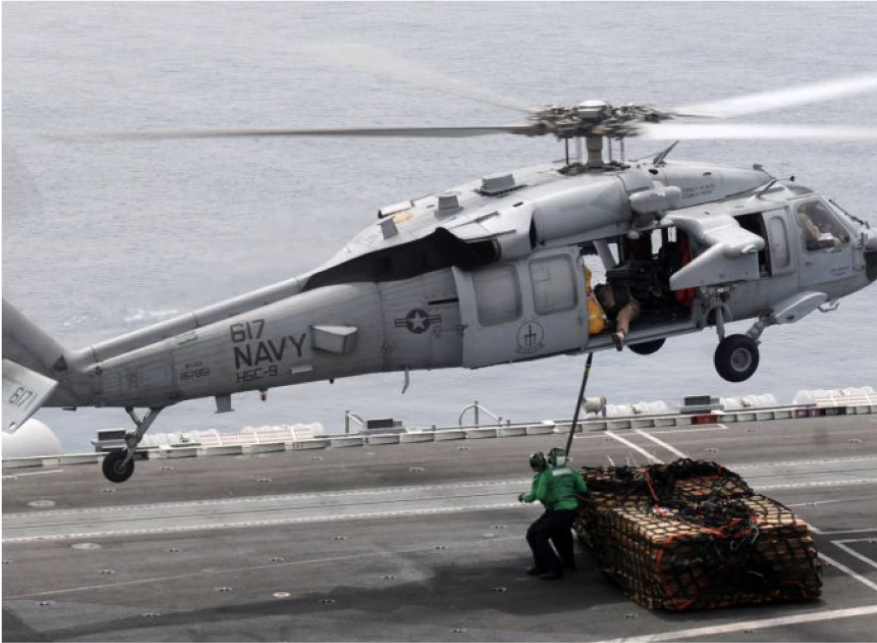
Lexco’s aerospace and defense cable assembly capabilities are focused on non-flight-critical applications. These assemblies still perform important mechanical and support functions throughout aerospace manufacturing, maintenance, lifting, cargo handling, ground operations, and military equipment.
In many of these environments, cable assemblies are used because they can combine strength with flexibility. This is especially useful in instances where rigid components may not be practical. Depending on the application, they may help position, retain, lift, secure, or move equipment while accommodating repeated motion and limited installation space.
The exact cable construction and testing requirements will vary based on how the assembly is used and the condition it is expected to withstand.
Other Uses for Cable Assemblies
Aircraft and aerospace components frequently need to be positioned, lifted, rigged, retained, supported, braced, or secured during manufacturing and maintenance.
Custom cable assemblies may be incorporated into:
- Assembly fixtures
- Lifting slings
- Maintenance tools
- Component-handling systems
- Winches and hoists
- Specialized shop equipment
Wire rope can support these functions while remaining more flexible and easier to route than a rigid mechanical component.
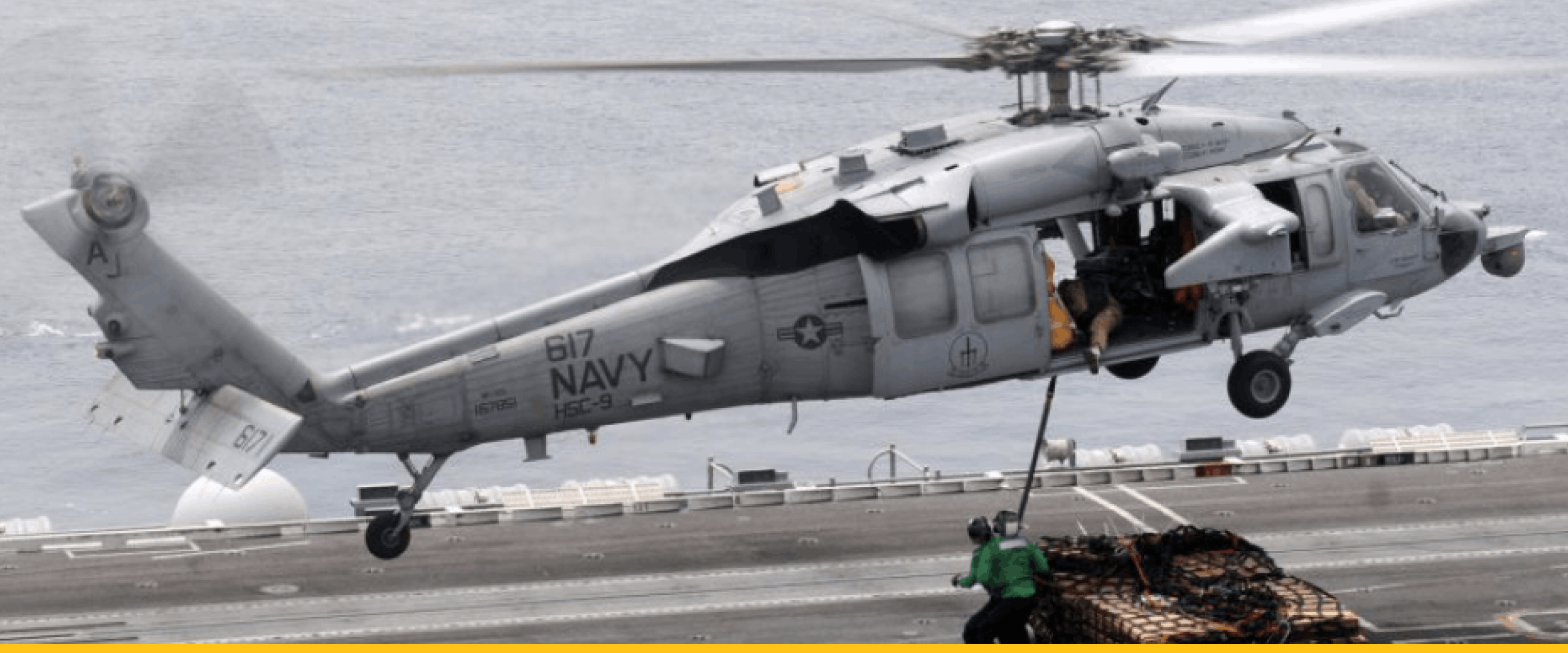
Engines, landing gear, access panels, doors, and other components may require specialized handling equipment during installation, repair, inspection, or replacement. The cable assembly used in that equipment must be designed around the required load, motion, fittings, safety factors, and operating environment.
Lexco also provides examples of cable configurations through its sling gallery.

How Are Lanyards and Tethers Used in Aerospace Applications?
In aerospace environments, custom wire rope lanyards and tethers serve critical security and retention roles, preventing foreign object damage (FOD) and keeping vital hardware tethered during operation and maintenance. High-reliability military lanyards are widely deployed across ground support equipment, aircraft manufacturing, and defense systems. Key applications include:
- Remove-Before-Flight Lanyards: Secure safety flags and lockout pins to ground equipment, ensuring critical covers and gear locks are removed prior to takeoff.
- Retaining Pins, Clips, and Caps: Prevent small, high-value components—such as quick-release pins, hitch clips, dust caps, and protective valve covers—from being misplaced or dropped into sensitive machinery.
- Access Panels and Doors: Tether structural access panels, hatches, and fairings to the airframe during routine servicing.
- Tools and Maintenance Equipment Tethers: Safeguard hand tools and testing gear when technicians work at height, eliminating drop hazards around flight decks and assembly lines.
Designing an assembly for these demanding environments requires precise specification tailoring. A successful military wire rope lanyard design depends on several engineered variables:
- Cable Constructions & Materials: Selecting flexible configurations like 7×7 and 7×19 stainless steel or galvanized aircraft cable balances bend radius with break strength.
- Coatings: Applying protective jackets—such as clear, color-coded, or UV-resistant nylon or vinyl—guards against abrasion, chemical exposure, and environmental wear.
- Fittings & Lengths: Customizing precision-swaged end fittings (eyelets, ball shanks, stamped tabs, or snap hooks) and exact cable lengths ensures a perfect fit for specific mounting points.
- Identification Features: Incorporating specialized markings, color-coded jacketing, or stamped tags enables rapid inventory identification and traceability on the flight line.

Why Are Mil-Spec Fittings Important, and What Are Some Examples?
Aircraft cable is only one part of a complete aerospace or defense assembly. The cable must be terminated with fittings that connect it to the intended equipment, component, attachment point, or mechanism.
The selected fitting must be compatible with the cable diameter, construction, material, loading, geometry, and applicable specification. Depending on the design, an assembly may use swaged terminals, balls, forks, eyes, threaded studs, sleeves, thimbles, or other specialized fittings.
Fitting selection can affect:
- Installation
- Dimensional accuracy
- Load transfer
- Alignment
- Fatigue performance
- Connection geometry
The fitting material must also be considered. Stainless steel cable may be paired with stainless steel hardware when required for corrosion resistance or customer specifications. Threads, pins, eye openings, terminal dimensions, and fitting orientation must all match the equipment and drawing.
Common mil-spec fitting examples include:
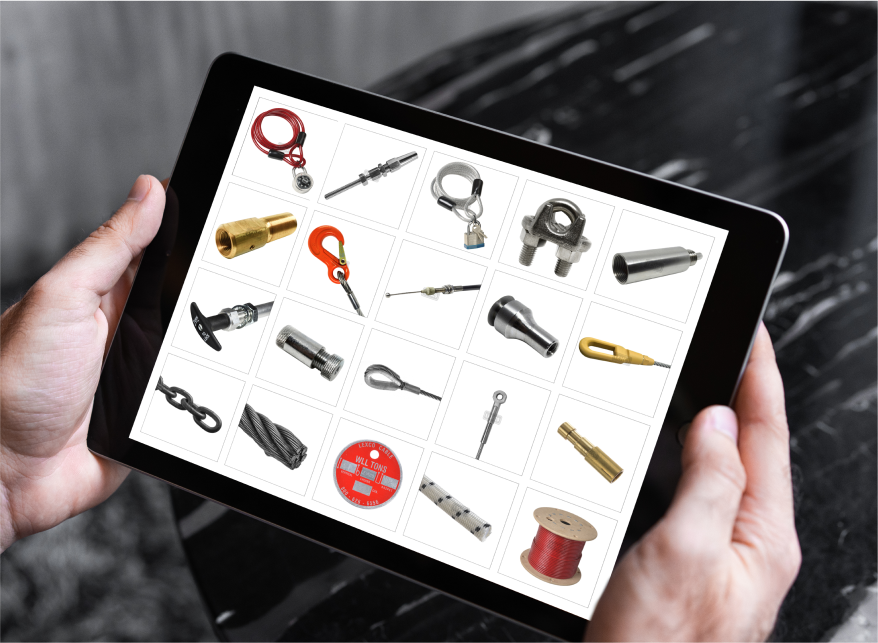
Additional mil-spec cable fittings and components are available through Lexco’s catalog.
number. Cable diameter, construction, material, jacket, finished length, fittings, tolerances, testing, and documentation can all affect the final design.
How Does Lexco Fabricate Custom Aerospace Cable Assemblies?
Lexco does not manufacture or strand MIL-DTL-83420 cable. Lexco uses certified aircraft cable and fabricates it into complete assemblies based on customer drawings, samples, specifications, and performance requirements.
Depending on the project, fabrication capabilities may include:
- Cutting aircraft cable to length
- Applying or coordinating coatings
- Swaging fittings and terminals
- Installing hardware
- Inspecting finished dimensions
- Proof loading
- Prestretching
- Preparing identification markings
- Producing quality and traceability documentation
Several specifications may apply to these processes.
MIL-DTL-5688 addresses proof loading and prestretching of aircraft cable. Refer to Table I load values based on 60% of MBS.
MIL-DTL-6117 provides requirements related to swaging aircraft cable assemblies and paragraph 3.7 references MIL-DTL-5688 proof-load testing.
MIL-DTL-781 covers the swaging of aircraft cable terminals such as Type I straight shank terminals and Type II ball-end terminals.
MIL-STD-130 addresses identification marking requirements for defense-related assemblies.
Lexco can support assemblies made from customer drawings, reference samples, specified part numbers, or detailed application requirements. When a design is still being finalized, Lexco can help identify cable, fitting, coating, and fabrication options that align with the intended non-flight-critical application.
Lexco’s custom aerospace cable assemblies can support OEM equipment, maintenance systems, lanyards, lifting equipment, cargo-handling mechanisms, and other specialized aerospace applications.
Lexco also offers military cable assembly capabilities involving mil-spec cable, fittings, proof testing, traceability, identification, and customer-specific documentation.
Do You Need a Custom Aerospace or Defense Cable Assembly?
Aerospace and defense cable assemblies must be designed around more than cable diameter and breaking strength. Construction, material, flexibility, coatings, fittings, fatigue resistance, dimensions, testing, identification, and traceability can all influence the finished assembly.
Lexco fabricates custom, non-flight-critical aerospace and military cable assemblies using certified aircraft cable, mil-spec fittings, coatings, testing processes, and customer-defined documentation.
Contact Lexco Cable to discuss your specifications or request a quote for a custom aerospace or defense cable assembly.
Frequently Asked Questions








GALLERY
MARKETS
CASE STUDIES
VIDEOS
From coiled cables to architectural railings, see examples that showcase our capabilities and inspire your next project.
From military to OEMs, fitness to agriculture, our solutions meet the specific needs of crucial industries.
Follow the journey of our products from initial design to final implementation in real-world applications.
Watch our videos to see the meticulous attention to detail that goes into our wire rope assemblies and services.
GALLERY
From coiled cables to architectural railings, see examples that showcase our capabilities and inspire your next project.
MARKETS
From military to OEMs, fitness to agriculture, our solutions meet the specific needs of crucial industries.