




Wire Rope Inspection Checklist: What to Look for Before Every Use
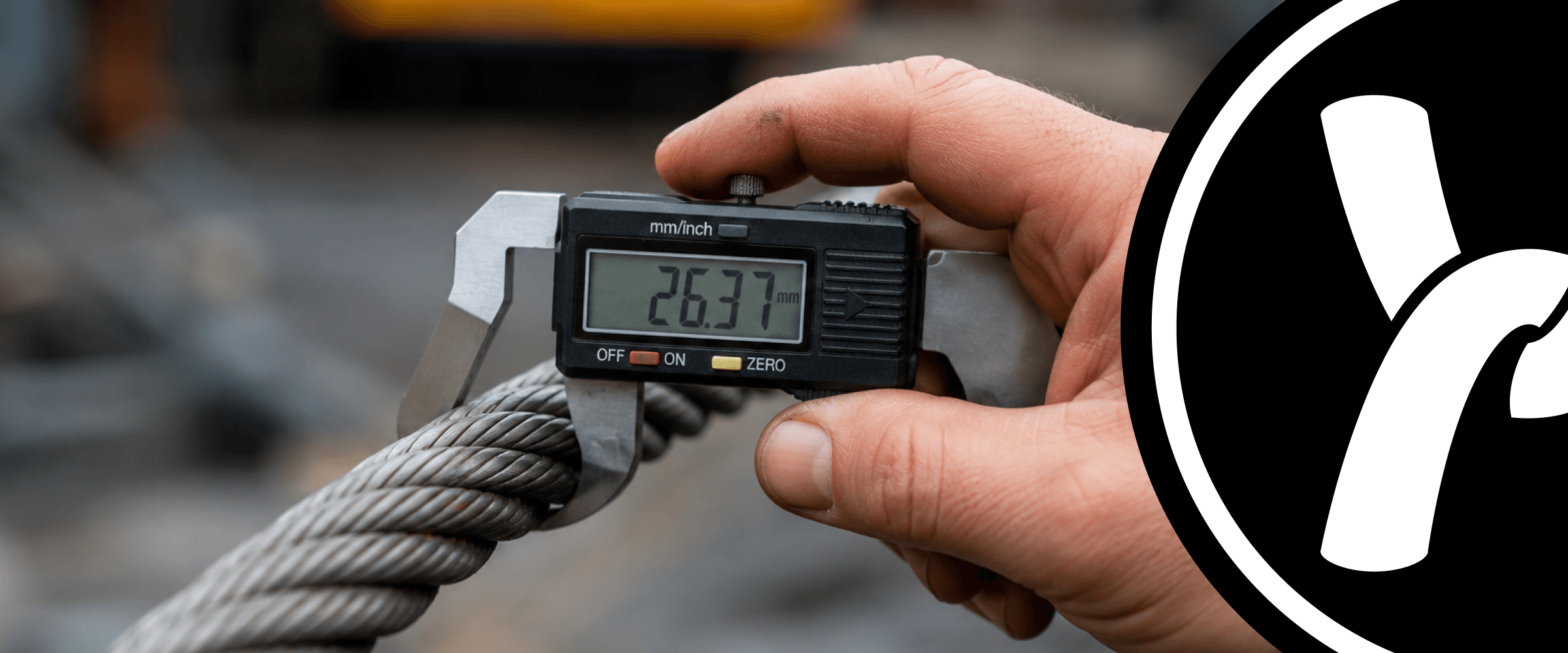
Wire Rope Inspection Checklist:
What to Look for Before Every Use
Summary
Regular wire rope inspections help identify wear, corrosion, distortion, and other damage before it leads to equipment failure or safety hazards. Effective inspection programs include initial, frequent, and periodic checks, along with proper documentation and clear removal-from-service criteria.
This blog will explore:
- Why Is Wire Rope Inspection Important?
- How Often Should Wire Rope Be Inspected?
- Wire Rope Inspection Checklist
- Common Signs of Wire Rope Damage
- When Should Wire Rope Be Removed from Service?
- Inspecting Wire Rope End Fittings and Terminations
Key Takeaways:
- Wire rope should be inspected before use, during routine operations, and at scheduled intervals.
- Common damage signs include broken wires, corrosion, kinking, birdcaging, crushing, and heat damage.
- End fittings and terminations must be inspected separately because they are common failure points.
- Ropes that meet ASME B30 rejection criteria should be removed from service immediately.
- Documented inspections improve safety, compliance, and the lifespan of wire rope systems.
Why Is Wire Rope Inspection Important?
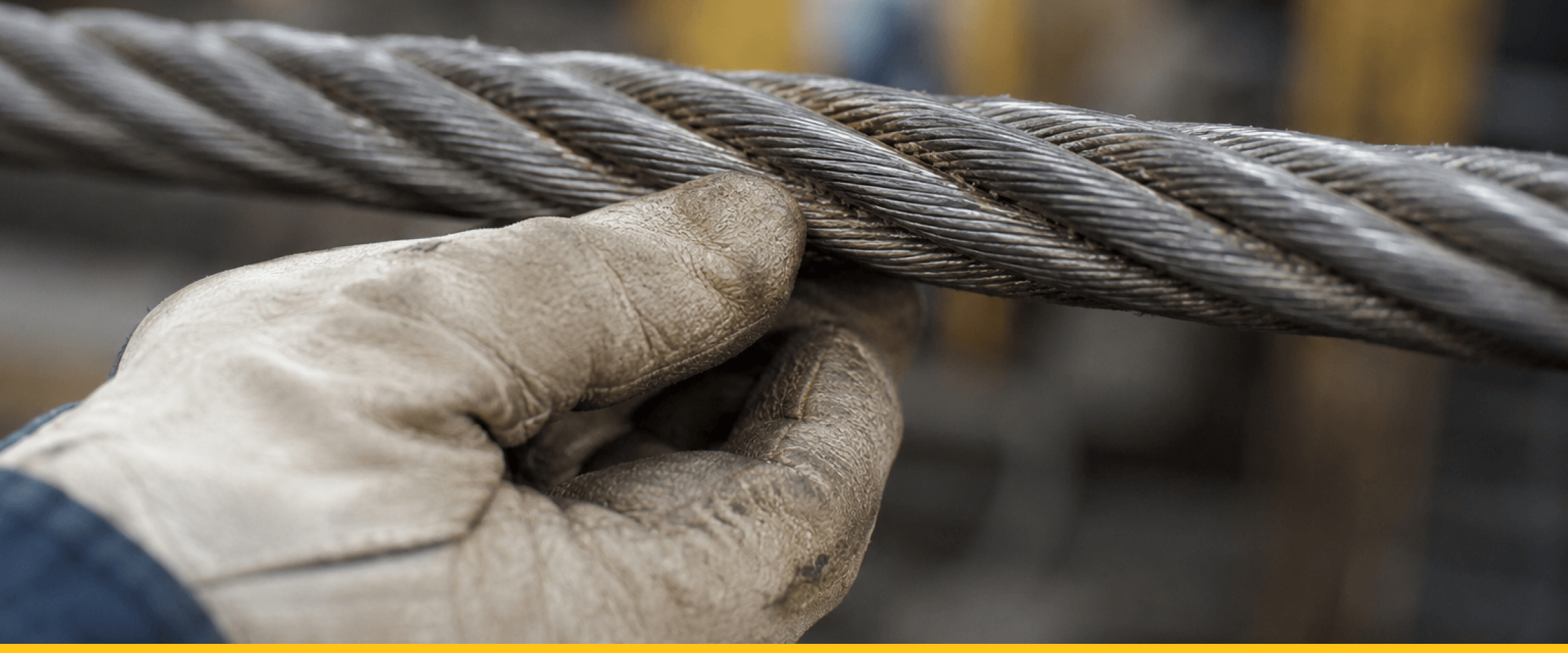
Conducting a regular wire rope inspection is a vital safety and compliance requirement for any industrial operation. Wire rope used in lifting, rigging, and structural tensioning applications is continuously subject to mechanical wear, material fatigue, and environmental damage that may not be immediately visible to the untrained eye. Because these cables often handle extreme dynamic and static loads, a single undetected flaw can lead to catastrophic equipment failure or severe workplace injuries.
To maintain safe working conditions and maximize the service life of your rigging systems, facilities must establish a consistent, documented inspection process managed by a trained inspector. Industry standards, including ASME B30 guidelines and Wire Rope Technical Board recommendations, dictate strict compliance parameters for monitoring cable integrity. This guide provides a practical wire rope safety checklist covering essential visual damage categories, proper evaluation procedures, and the exact criteria used to determine when a cable must be removed from service.
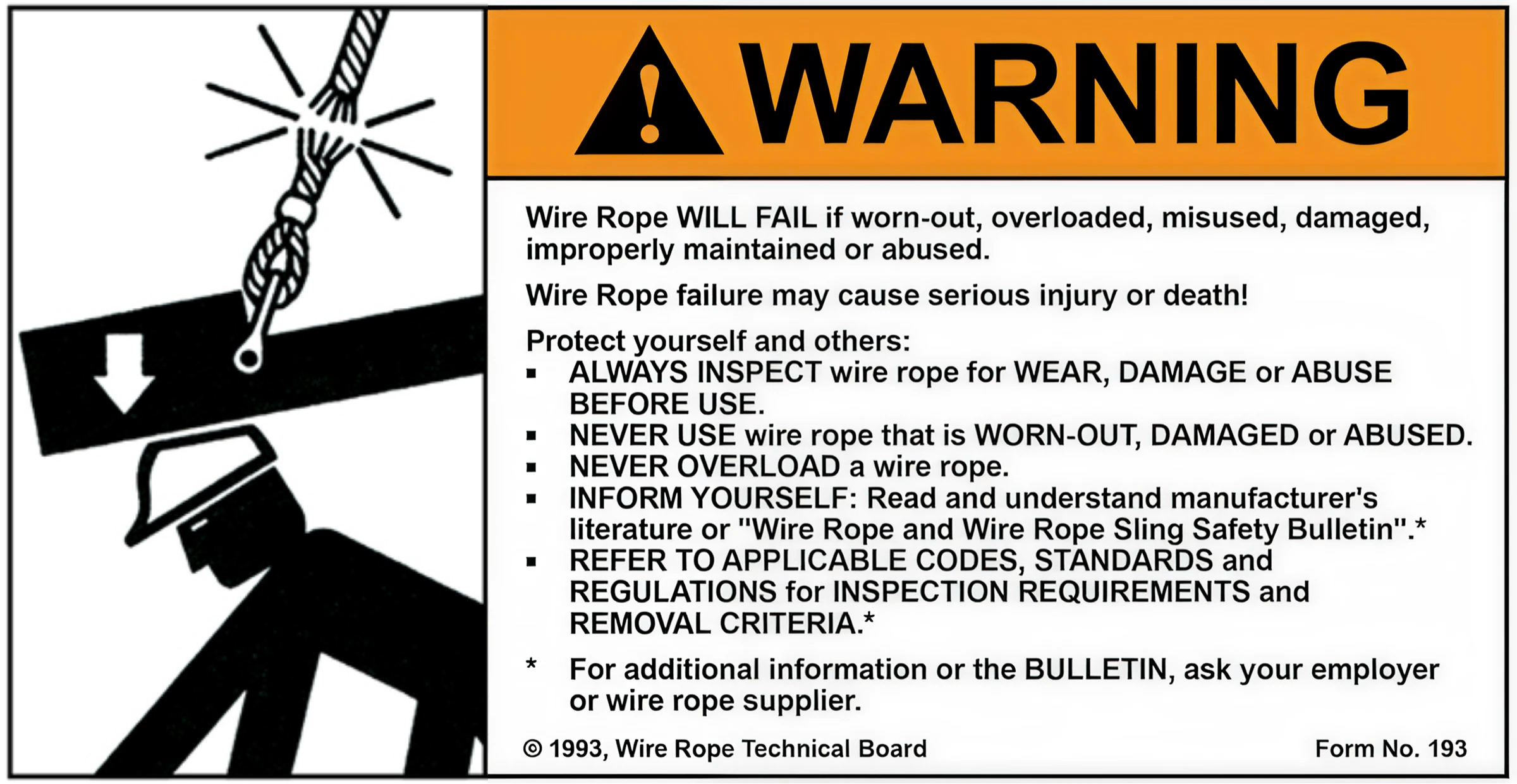
Always follow wire rope warnings per Wire Rope Technical Board:
How Often Should Wire Rope Be Inspected?
The precise frequency of a wire rope safety inspection is determined by the specific type of evaluation required and the severity of the operating environment. Industry standards categorize inspections into three distinct phases:
Initial Inspection
Before any new or reinstalled cable is placed into service, it must undergo an initial inspection. This process verifies that the correct type, diameter, construction class, working load limit, and safety factor have been selected for the specific application, while ensuring the cable has not sustained physical damage during shipping, handling, or storage. Inspectors should also confirm that identification tags, labels, or laser markings are accurate and legible, and review any available material certifications or quality documentation before the rope enters service.
Frequent Inspection
A visual check should be performed by a trained operator before every single use or work shift. This routine assessment requires a close visual examination of the entire length of rope expected to be active during operation, with special emphasis placed on high-wear zones, end fittings, and terminations.
Periodic Inspection
This is a thorough, highly detailed evaluation conducted at scheduled intervals by a designated, qualified professional. The frequency of periodic inspections is dictated by application severity (for heavy-duty cranes and hoists, this typically ranges from a monthly to an annual basis depending on cumulative usage and environmental exposure).
Documenting your periodic inspections is a strict legal and operational requirement under ASME B30 standards. Legally compliant records must be carefully maintained, noting the exact date of evaluation, the designated inspector name, and all comprehensive findings or wear conditions discovered.
Wire Rope Inspection Checklist
This structured wire rope maintenance checklist serves as a practical, step-by-step framework that operators and inspectors can reference before and during operations. It must always be used alongside applicable federal and industrial safety standards.
Overall Rope Condition
- Count Broken Wires: Inspect the active length of the cable to systematically count the number of broken wires per individual strand and within a single lay length.
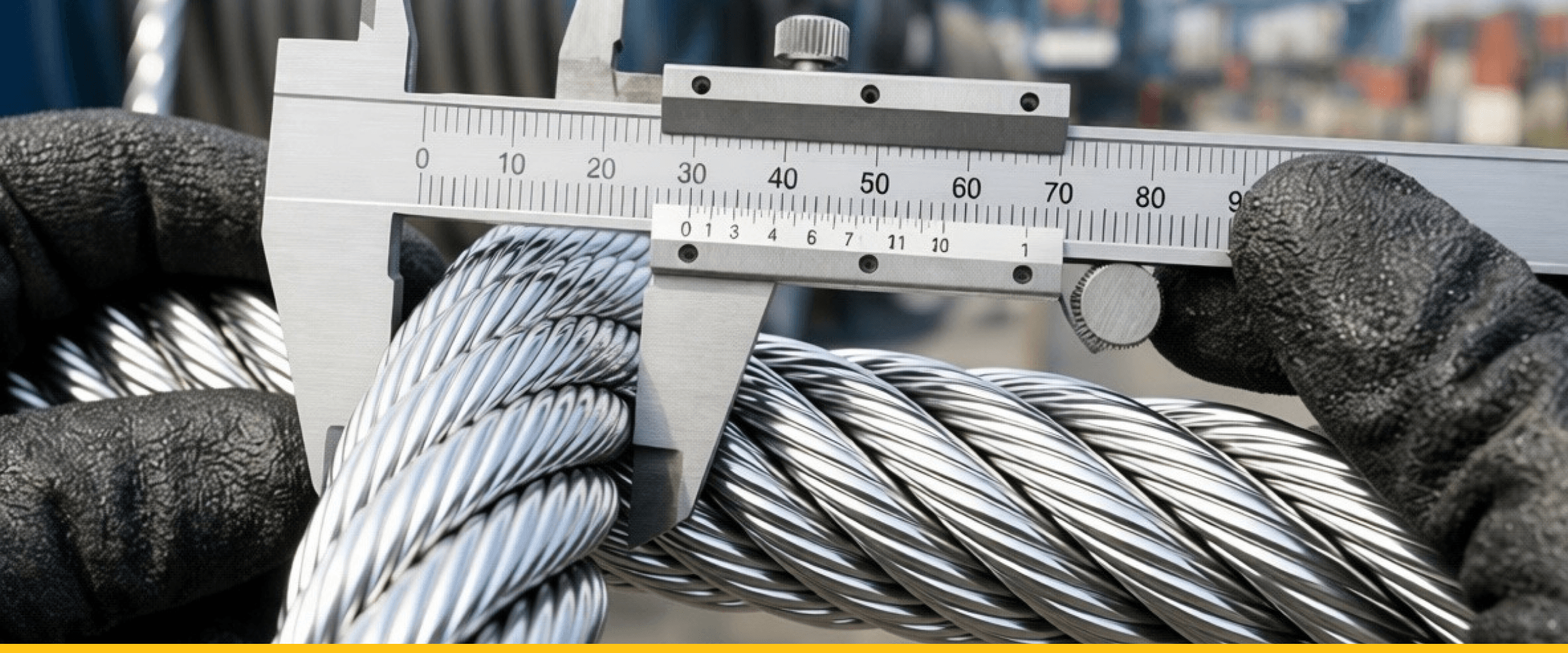
- Measure Diameter: Use a technician’s caliper to measure the outer diameter across its widest opposite points. Compare this to the nominal diameter, checking for a wire rope diameter reduction exceeding 1/64 inch or any clear evidence of localized core failure.
- Check for Geometrical Distortion: Examine the entire body for severe structural flaws, including wire rope kinking, wire rope birdcaging, or any permanent structural distortion that alters the rope’s original geometry.
- Look for Corrosion: Check the exterior surface for signs of wire rope corrosion, pitting, or rust, and inspect internal layers where accessible.
- Assess Heat Damage: Inspect the steel for discoloration, localized heat patterns, or a total loss of internal wire rope lubrication caused by extreme thermal exposure.
Wear and Abrasion
- Evaluate Wire Profiles: Inspect the crown of the outer wires for flat spots, peening, or a significant loss of wire cross-section driven by continuous wire rope wear and surface-to-surface abrasion.
- Identify Localized Wear Patterns: Note whether severe abrasion is concentrated in a specific zone, because localized wear often indicates underlying sheave damage or drum misalignment issues.
Fatigue and Mechanical Damage
- Monitor Bending Zones: Look for individual broken wires concentrated near end fittings or clustered within critical zones subjected to repeated bending stress.
- Check for Compression: Inspect the assembly for physical wire rope crushing, flattening, or ovalization of the cross-section, which severely impacts overall flexibility and load-bearing capacity.
- Spot Protruding Elements: Look for displaced or protruding wires (often called popped wires), which serve as an immediate indicator of severe internal damage or historical overloading events.
End Fittings and Terminations
- Inspect Connections: Examine all swaged fittings, socketed connections, and clipped terminations for structural cracks, physical distortion, or material deformation.
- Check Load-Bearing Thimbles: Evaluate heavy-duty thimbles for cracking, symmetry loss, or excessive wear at the precise contact points where the rope bears load.
- Verify Clip Placement: Ensure all wire rope clips are properly installed (the U-bolt must always rest on the dead end of the cable, with correct spacing intervals and proper torque applied to the nuts).
- Check for Trapped Moisture: Look closely for rust or pitting concentrated at termination points, as moisture frequently accumulates at rigid fittings.
Sheaves and Drums (Where Accessible)
- Evaluate Sheave Grooves: Inspect the contour of sheave grooves for excessive wear, deeper ridges, or micro-cracks.
- Analyze Drum Grooves: Check the drum grooves to ensure smooth spooling and identify identical wear patterns across the drum face.
- Check Alignment: Note any severe mechanical misalignment that forces the running wire rope cable to rub aggressively against sheave flanges.
Common Signs of Wire Rope Damage
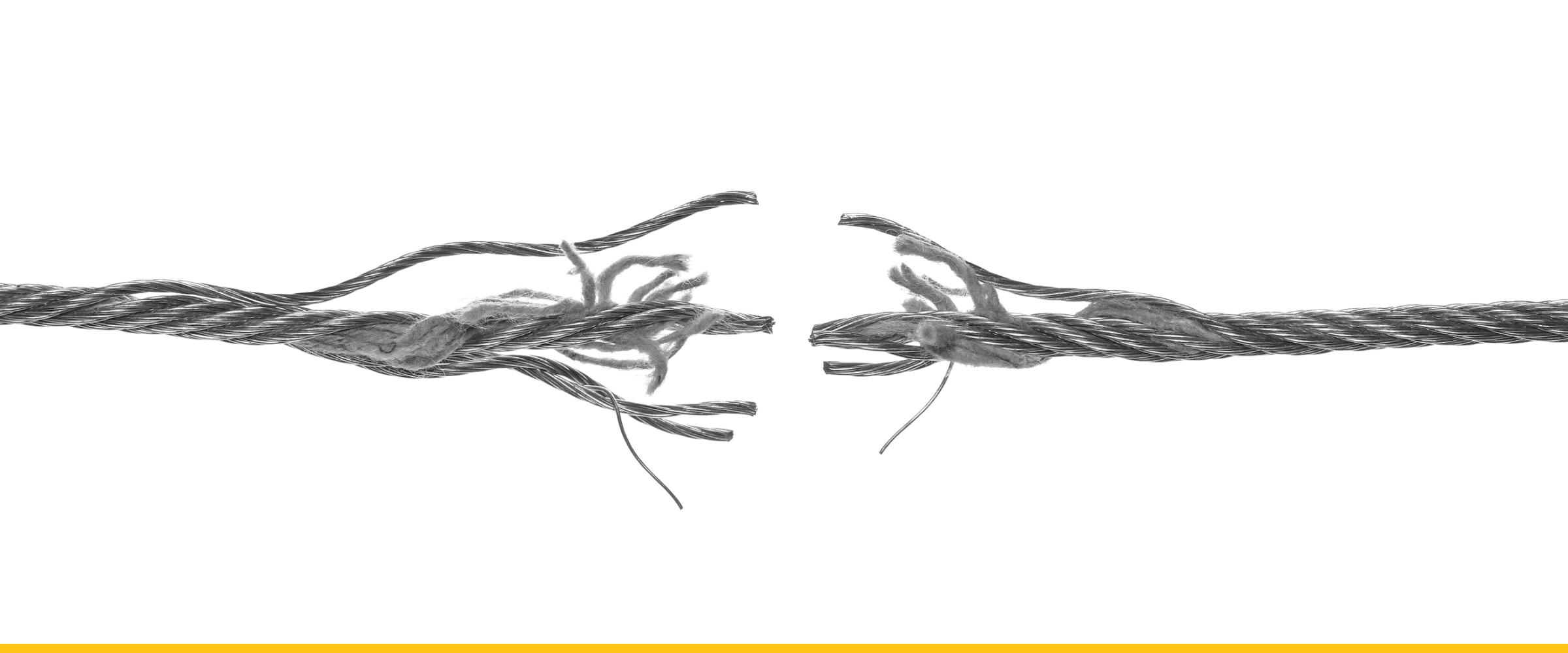
To make accurate removal-from-service decisions, industrial professionals must be able to identify primary failure modes in plain language. Based on the Wire Rope Technical Board damage categories, these are the most common signs of wire rope damage to watch out for:
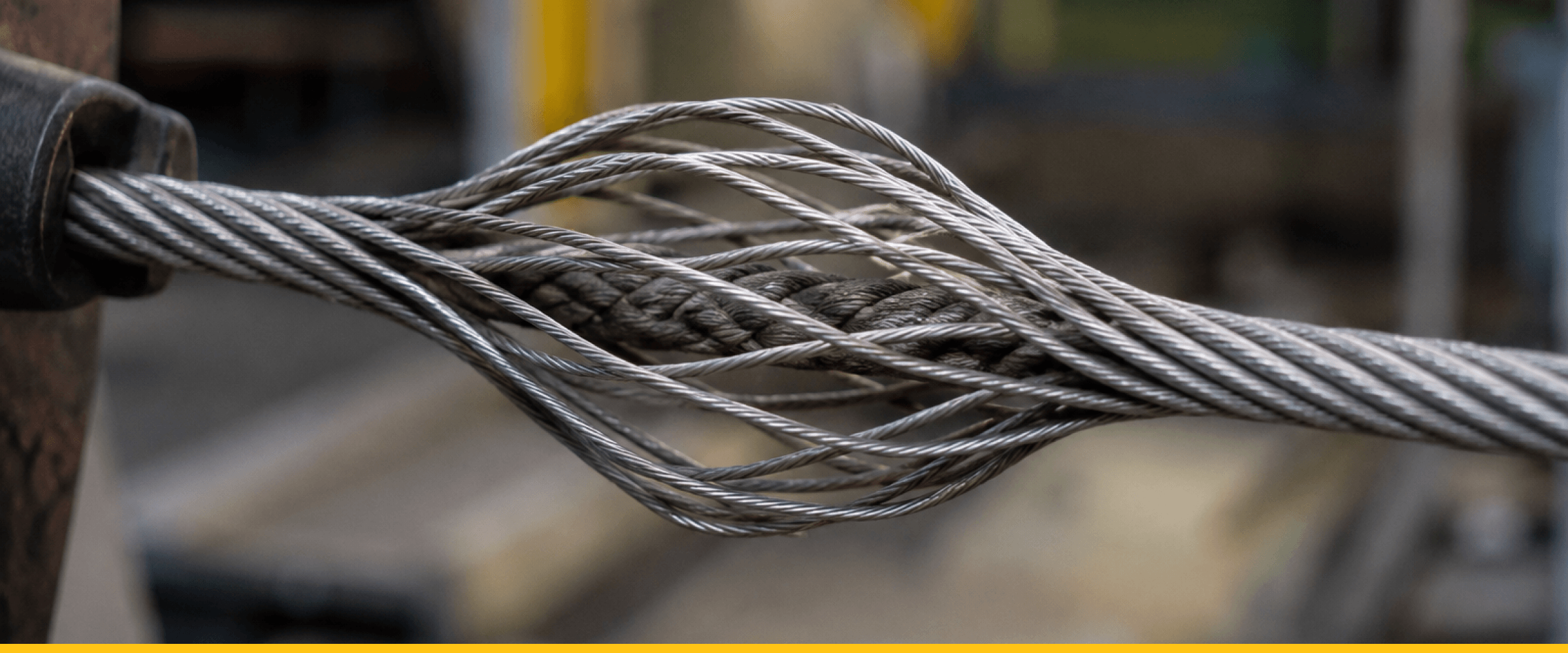
Wire Rope Birdcaging
This damage appears as a dramatic, localized swelling where the outer strands separate completely and bulge away from the central core. It is typically caused by a shock load (sudden, violent release of operating tension) or by running a cable through tight, improperly sized sheave grooves.
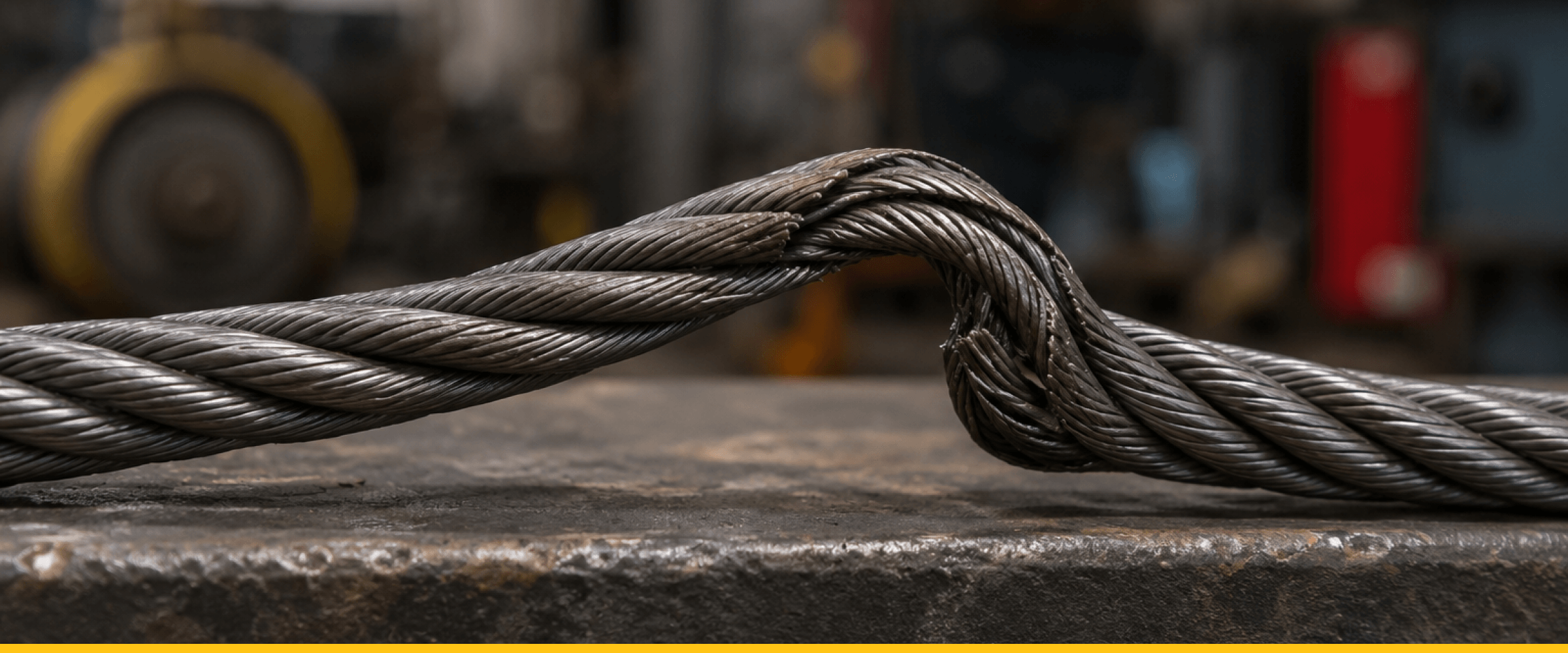
Wire Rope Kinking
Driven by improper uncoiling, poor handling, or slack loops, a kink creates a permanent, sharp loop or bend that permanently disrupts the uniform lay of the strands. Once a kink forms, the internal wire structure is altered and cannot be repaired.
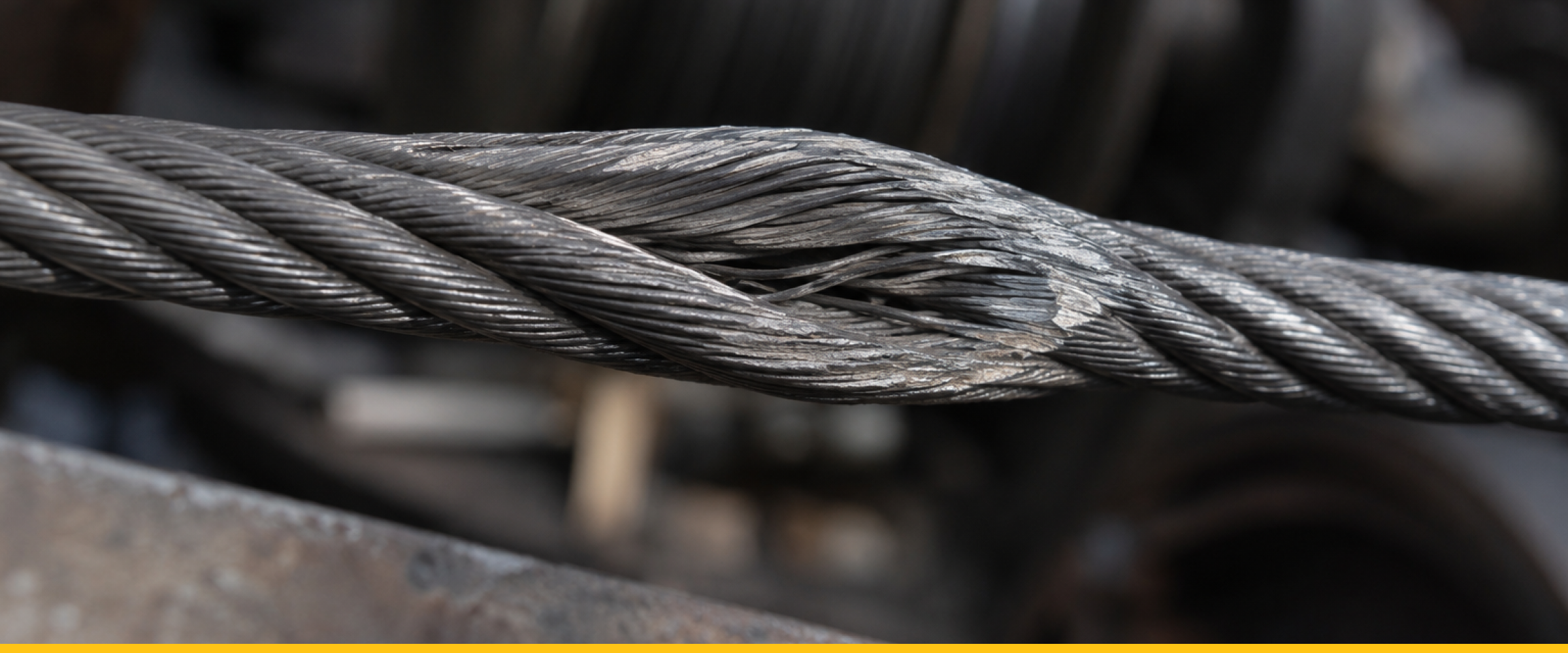
Wire Rope Crushing
This mechanical flaw looks like a flattened, pinched, or heavily distorted cross-section. It is usually caused by poor crossover winding on a spooling drum or excessive external pressure, which compromises the working load limit of the line.
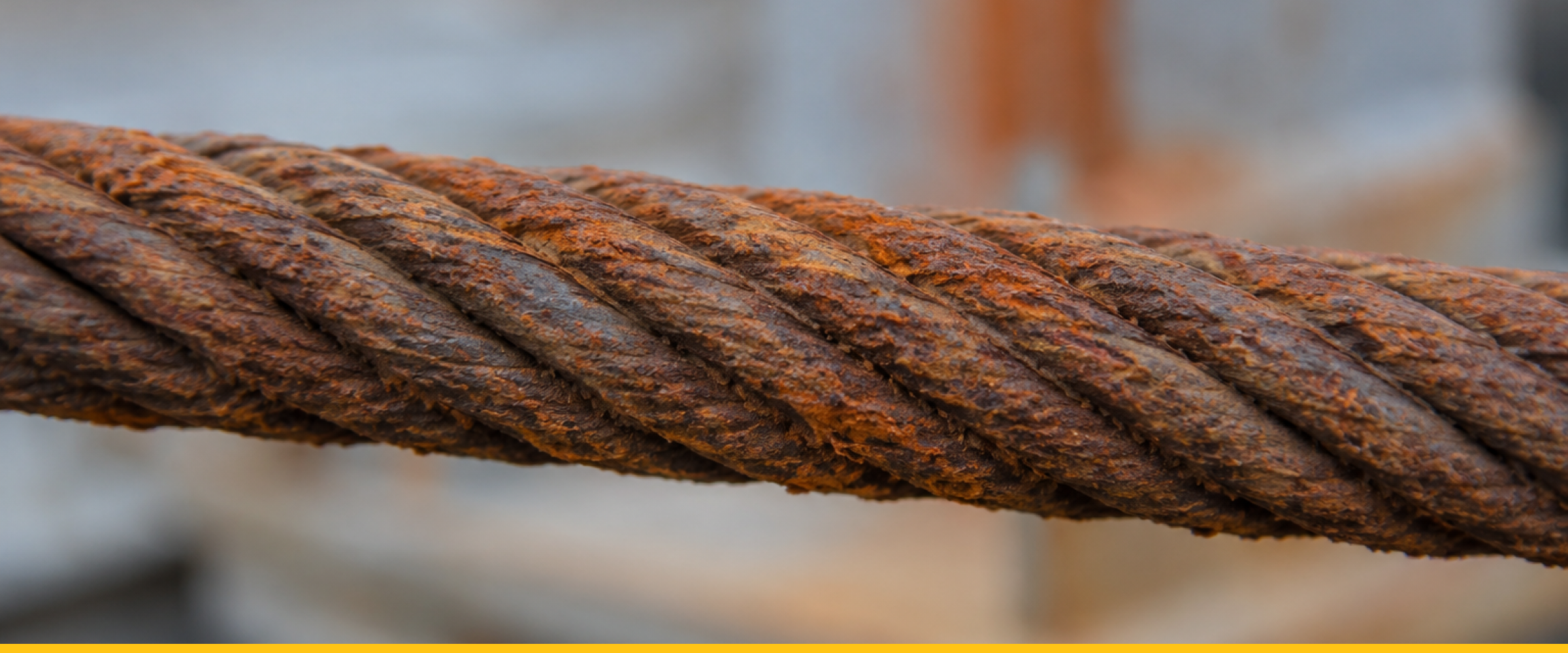
Wire Rope Corrosion
Exposure to rain, saltwater, or industrial chemicals causes pitting and heavy oxidation across the steel surfaces. Internal corrosion is particularly hazardous because it is hidden from plain sight, yet it steadily degrades the minimum breaking strength of the assembly.
When Should Wire Rope Be Removed from Service?
Adhering to strict wire rope removal from service criteria is essential for ensuring site safety and maintaining regulatory compliance. According to ASME B30 standards and Wire Rope Technical Board guidance, an industrial cable must be removed from active service immediately if it exhibits any of the following rejection conditions:
| Damage Category | Image | Specific Removal Criteria |
|---|---|---|
| Broken Wires | 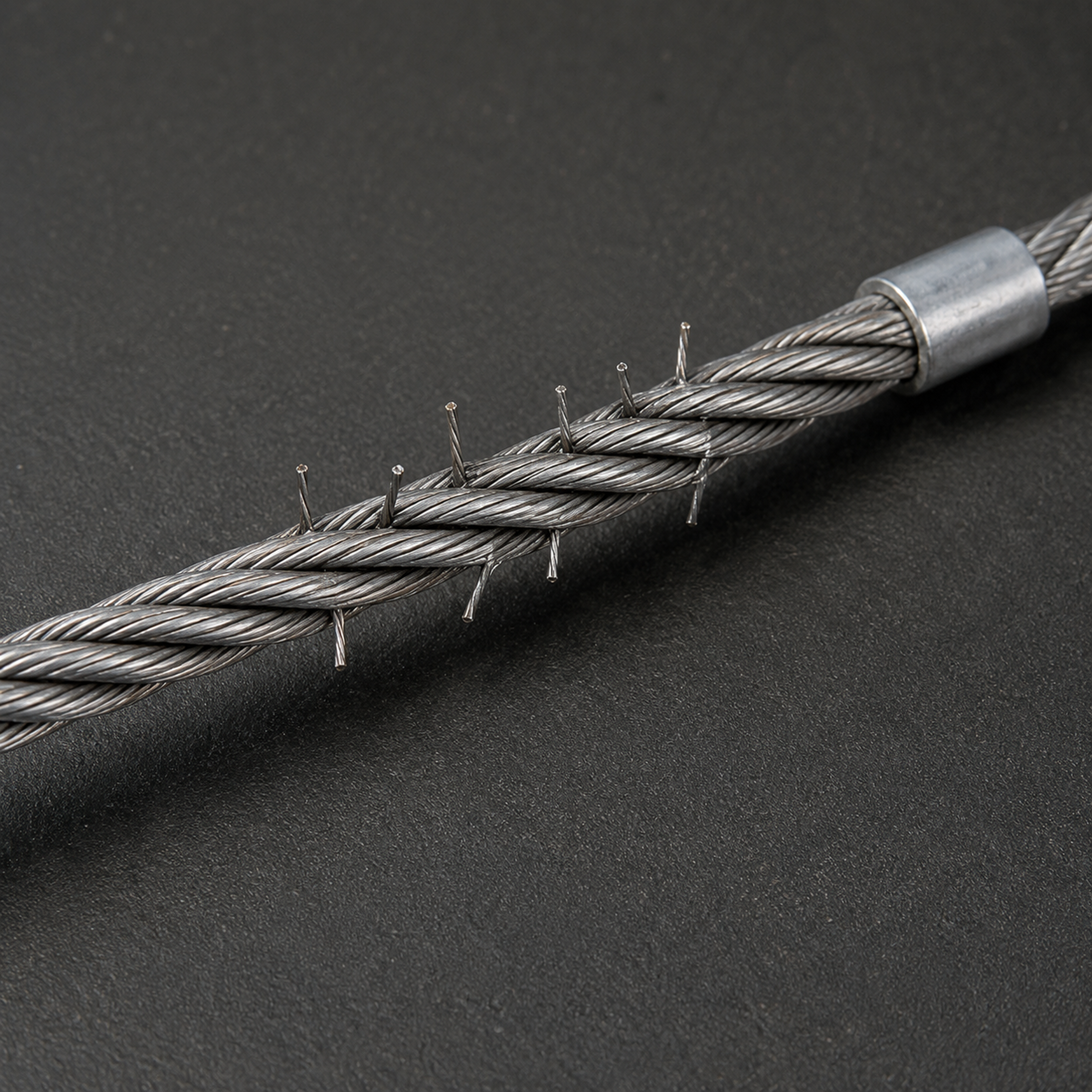 |
Six or more randomly distributed broken wires in one lay length, or three or more broken wires in a single strand within one lay length (refer to ASME B30.9 or specific regulatory criteria for your application). |
| Diameter Reduction | 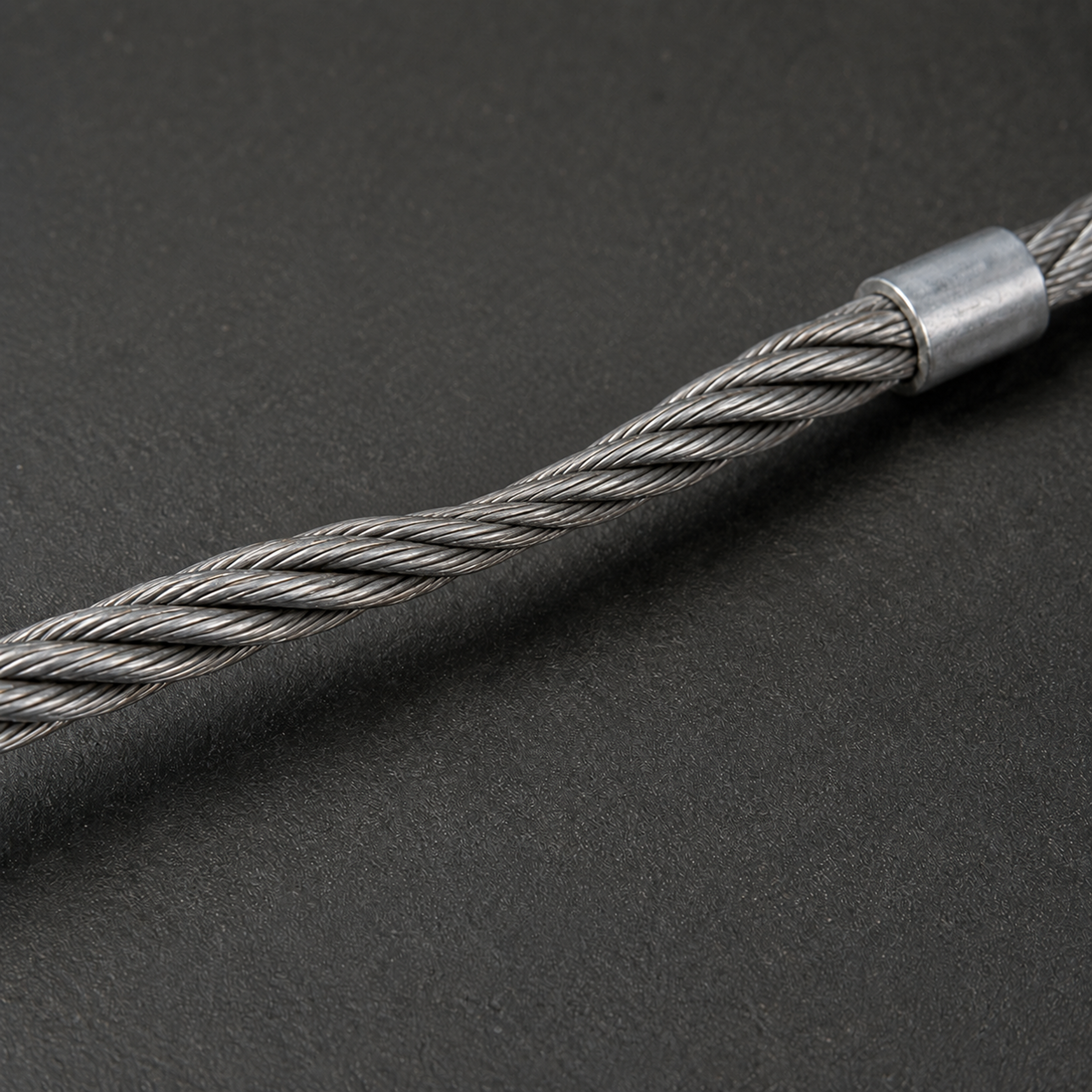 |
Any wire rope diameter reduction exceeding 1/64 inch from nominal diameter, or any clear indication of core failure such as a reduction in diameter greater than 3/64 inch. |
| Heat Damage | 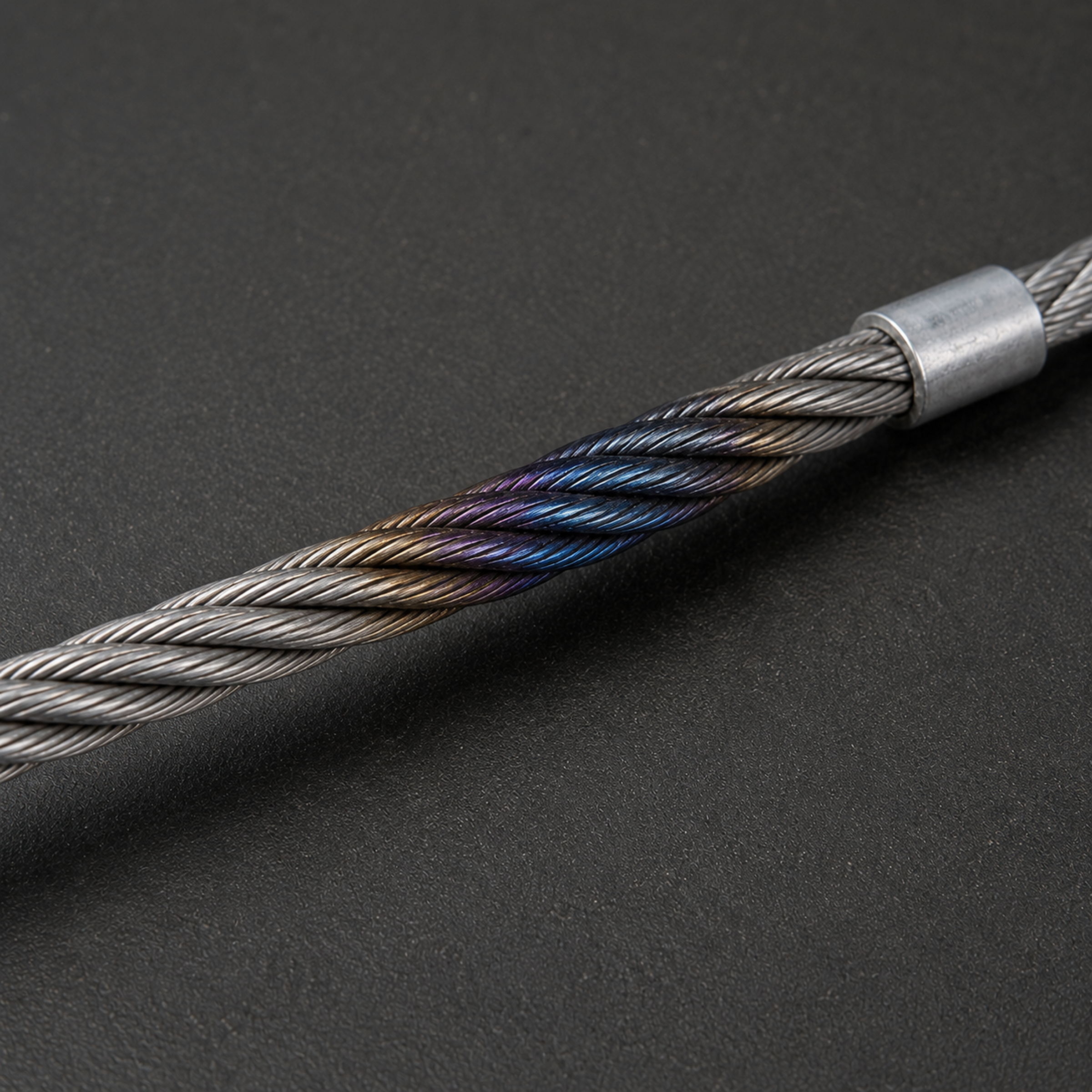 |
Clear evidence of thermal damage, including steel discoloration, blueing of the wires, or completely melted internal lubrication. |
| Corrosion | 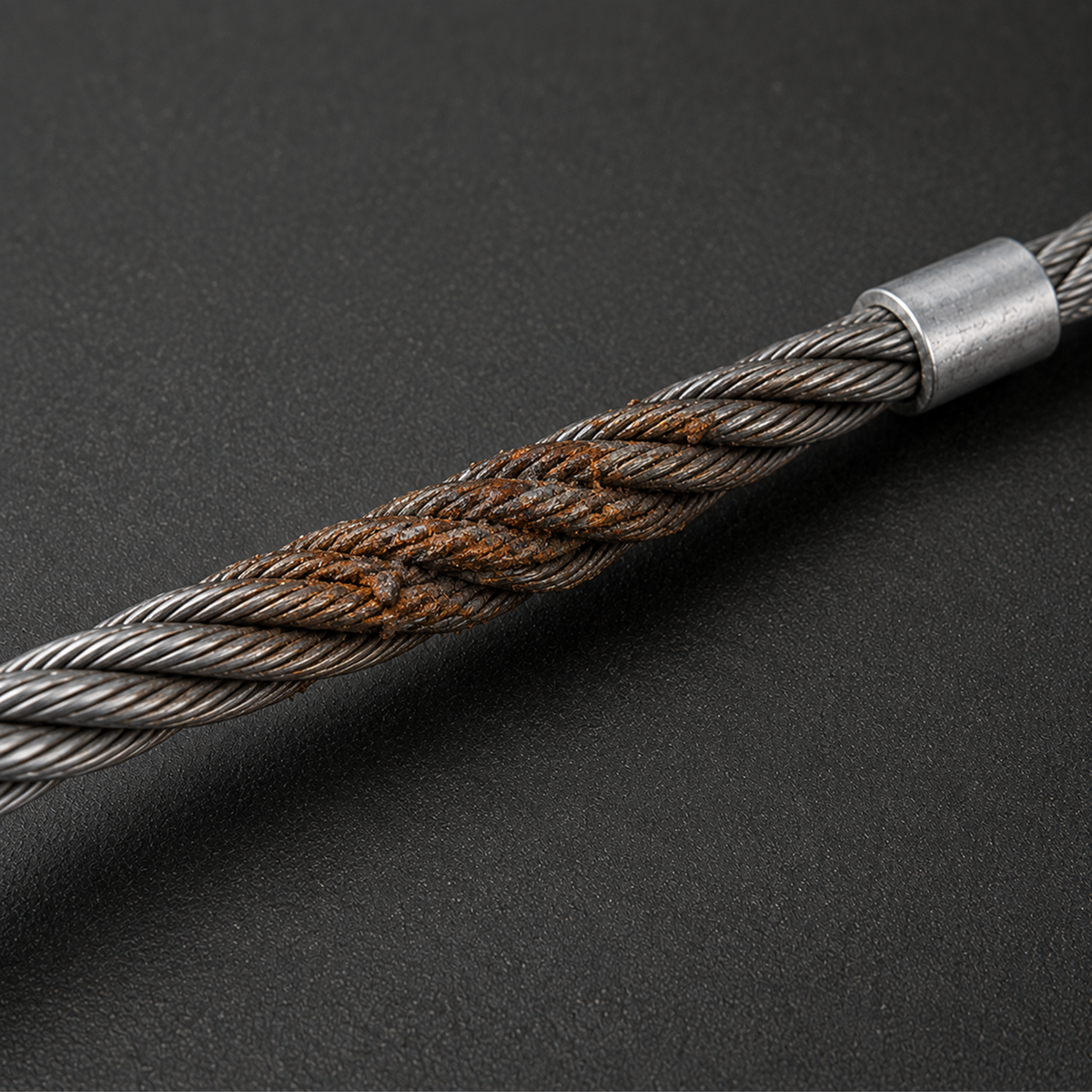 |
Advanced evidence of corrosion, particularly pitting or suspected internal corrosion that cannot be fully assessed externally. |
| Structural Distortion | 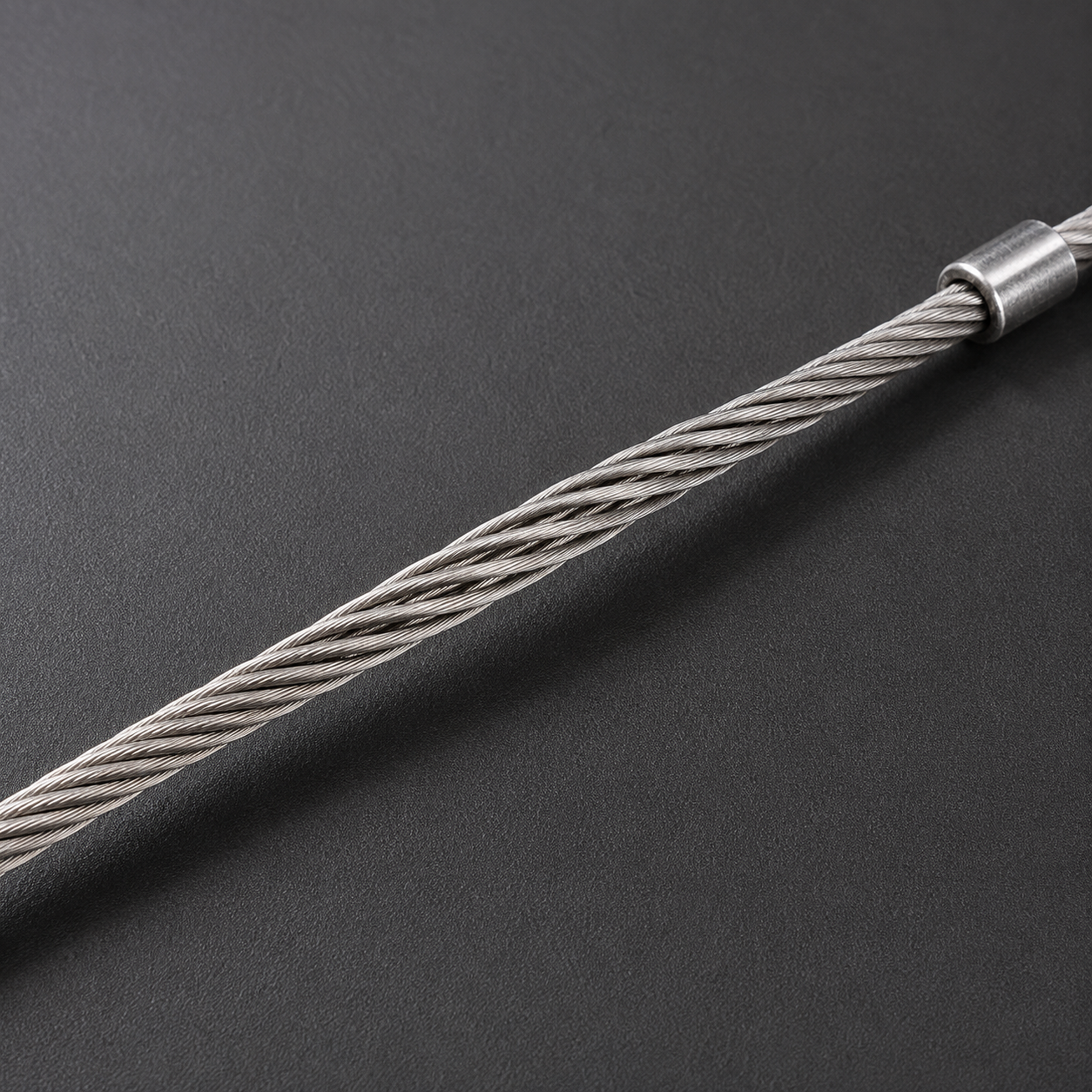 |
Any permanent kinking, birdcaging, or structural distortion that alters the uniform rope geometry. |
| Wire Displacement | 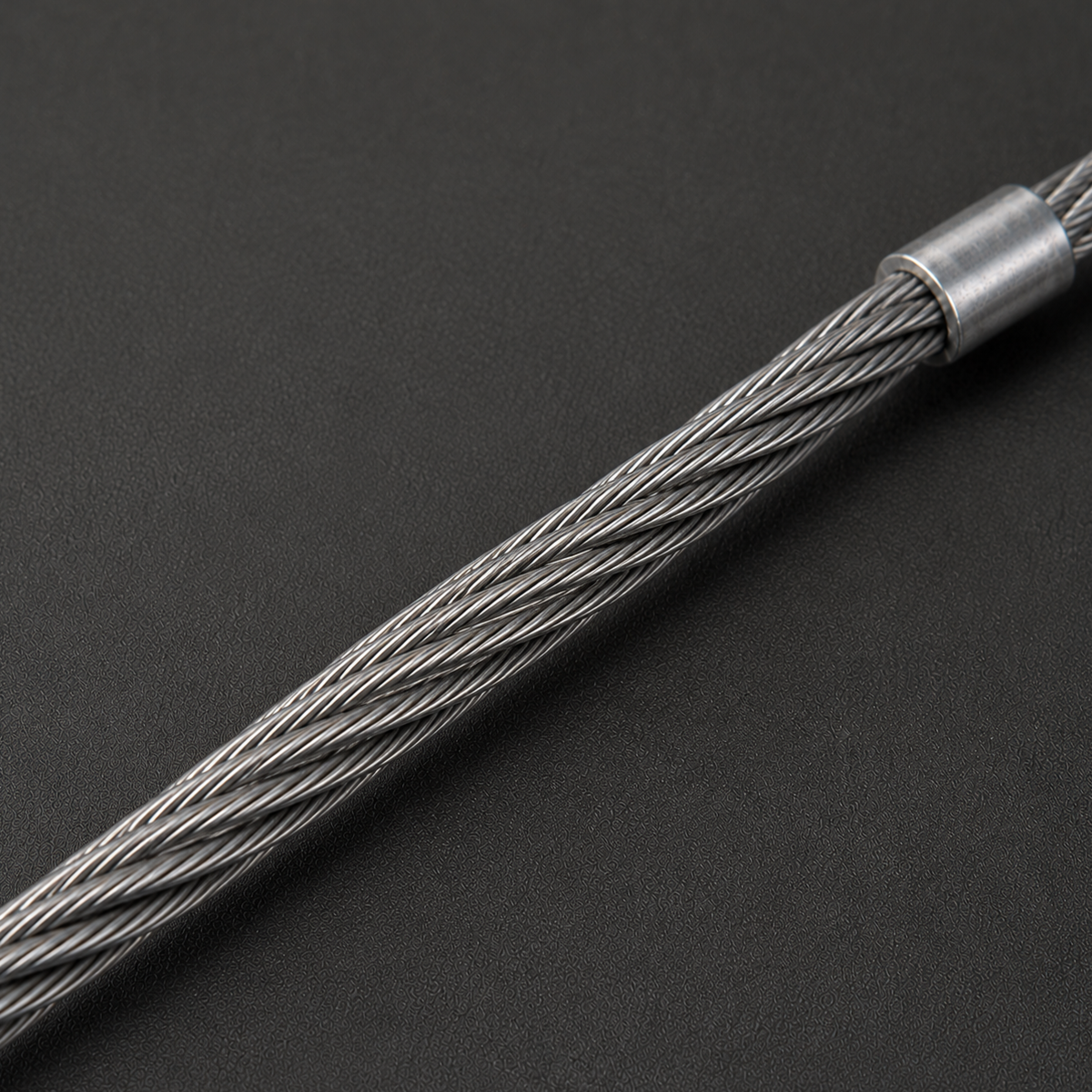 |
The physical displacement or protrusion of individual wires or strands from the main rope body. |
| Overloading | 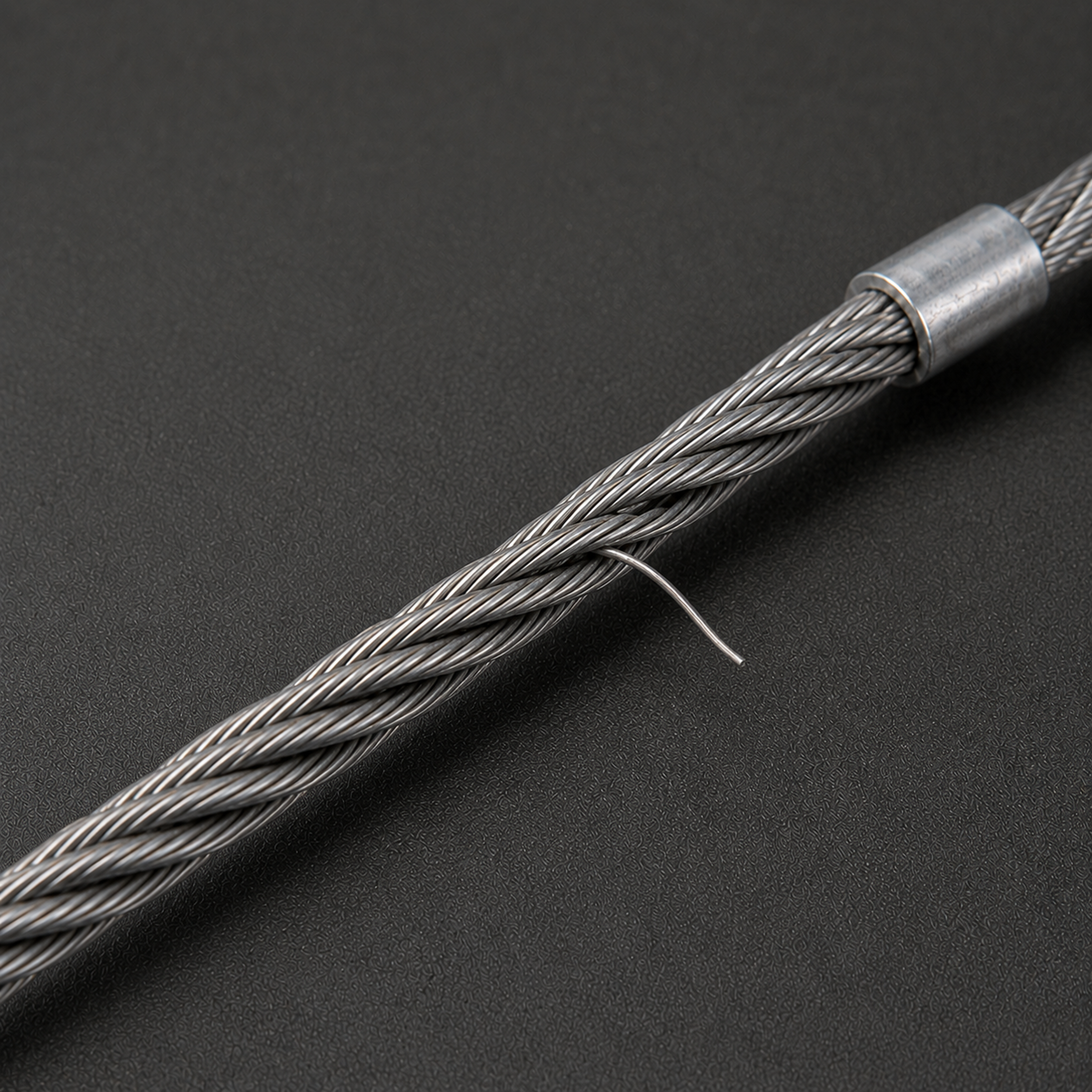 |
Any operational evidence indicating that the cable has been subjected to a sudden shock load or a severe overload event. |
| Termination Issues | 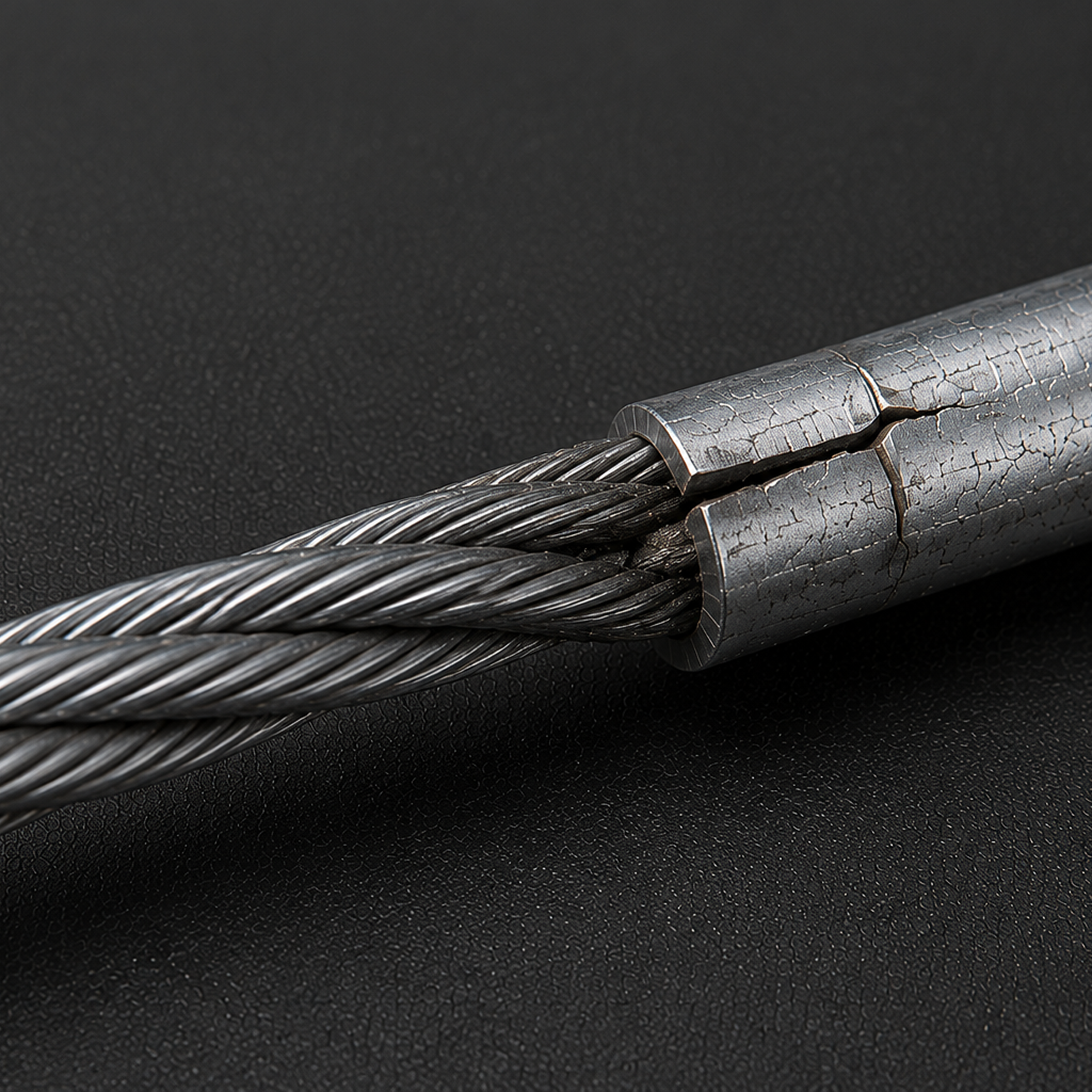 |
Visible damage, structural cracking, or rope slippage at end fittings or terminations. |
Inspecting Wire Rope End Fittings and Terminations
Terminations are a critical and frequently overlooked part of a comprehensive wire rope checklist. Because an industrial cable assembly is only as strong as its weakest termination, these components determine exactly how safely the rope transfers its load to the rigging hardware.
Thorough end fitting inspection is mandatory at the start of initial service and immediately following any sudden shock loading event.
Swaged and Crimped Fittings: Inspect carefully for fine hairline cracks along the outer sleeve, visible evidence of rope slippage within the sleeve body, and signs of hidden corrosion forming at the critical cable-sleeve interface.
Wire Rope Clips (U-bolt Clips): Verify that the exact required number of clips are installed, that they feature the proper spacing intervals, and that the orientation is correct with the U-bolt placed exclusively on the dead or short end. Check the specific torque on the nuts to prevent sudden loading slippage.
Thimbles: Inspect heavy-duty steel thimbles for structural deformation, cracking, or advanced wear along the internal groove where the rope bears. A deformed thimble concentrates the load unevenly on the individual strands, accelerating premature fatigue failure.
Socketed Terminations: Check carefully for any evidence of wire movement within the socket body and inspect the entire cast cone area for structural cracking or stress fractures.
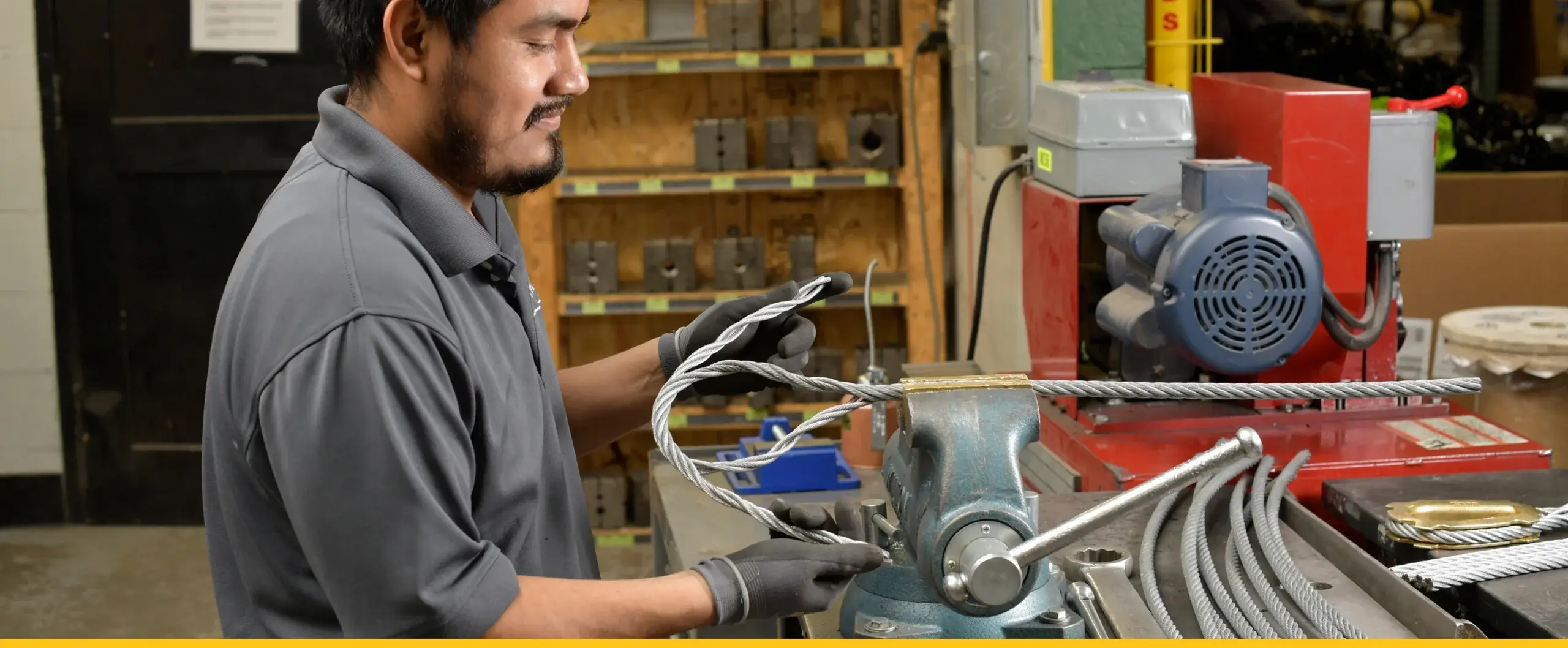
At Lexco Cable, our professional swaging and crimping capabilities ensure secure, high-quality terminations designed to preserve the structural integrity of your custom wire rope assemblies.
Lexco’s Wire Rope Expertise
Maintaining safe operations requires high-quality industrial cable assemblies and reliable inspection practices. At Lexco Cable, we specialize in offering custom wire rope assemblies tailored to your exact project specifications. Beyond supplying superior galvanized wire rope, aircraft cable, and stainless steel wire rope, our technical capabilities include precision wire rope cutting, professional swaging and crimping, and rigorous proof loading and pull testing to verify safety and compliance.
Contact Lexco today to discuss your technical specification and secure the reliable hardware your project demands.
Frequently Asked Questions

Recommended Resources




GALLERY
MARKETS
CASE STUDIES
VIDEOS
From coiled cables to architectural railings, see examples that showcase our capabilities and inspire your next project.
From military to OEMs, fitness to agriculture, our solutions meet the specific needs of crucial industries.
Follow the journey of our products from initial design to final implementation in real-world applications.
Watch our videos to see the meticulous attention to detail that goes into our wire rope assemblies and services.
GALLERY
From coiled cables to architectural railings, see examples that showcase our capabilities and inspire your next project.
MARKETS
From military to OEMs, fitness to agriculture, our solutions meet the specific needs of crucial industries.